Cool hair styles do not have to involve a dramatic haircut or an hour in front of the mirror. Often, a different parting, a softer finish or a simple change in how you gather your hair is enough to refresh your look. The most useful style is one that feels comfortable, works with your texture and fits the time you actually have.
This guide covers five wearable ideas: a textured lob, a sleek low ponytail, a half-up claw-clip style, defined natural curls and a loose side braid. Each section includes a matching image, practical styling steps and ways to adapt the look. Use the photographs as inspiration rather than a promise that every hair type will produce the same result.
How to Choose Cool Hair Styles That Work for You
Start with your current length and natural texture. Hair that falls above the shoulders behaves differently from long hair, and a dense curl pattern needs a different approach from fine, straight strands. Choose a look that cooperates with those features instead of assuming you need to change them.
Next, think about your day. A loose style can suit an evening out, while a ponytail or clip may be easier when you need your face clear. Consider how a neckline, earrings or scarf will sit beside the hairstyle. You can keep the same outfit and change its overall impression simply by moving your hair.
Make your first attempt on a day when you have a little extra time. Check the back with a second mirror and notice whether a clip slips or an elastic feels tight. Those small observations are more useful than buying several new products before you know what the style needs.
1. The Textured Lob: Soft Movement Without a Complicated Finish
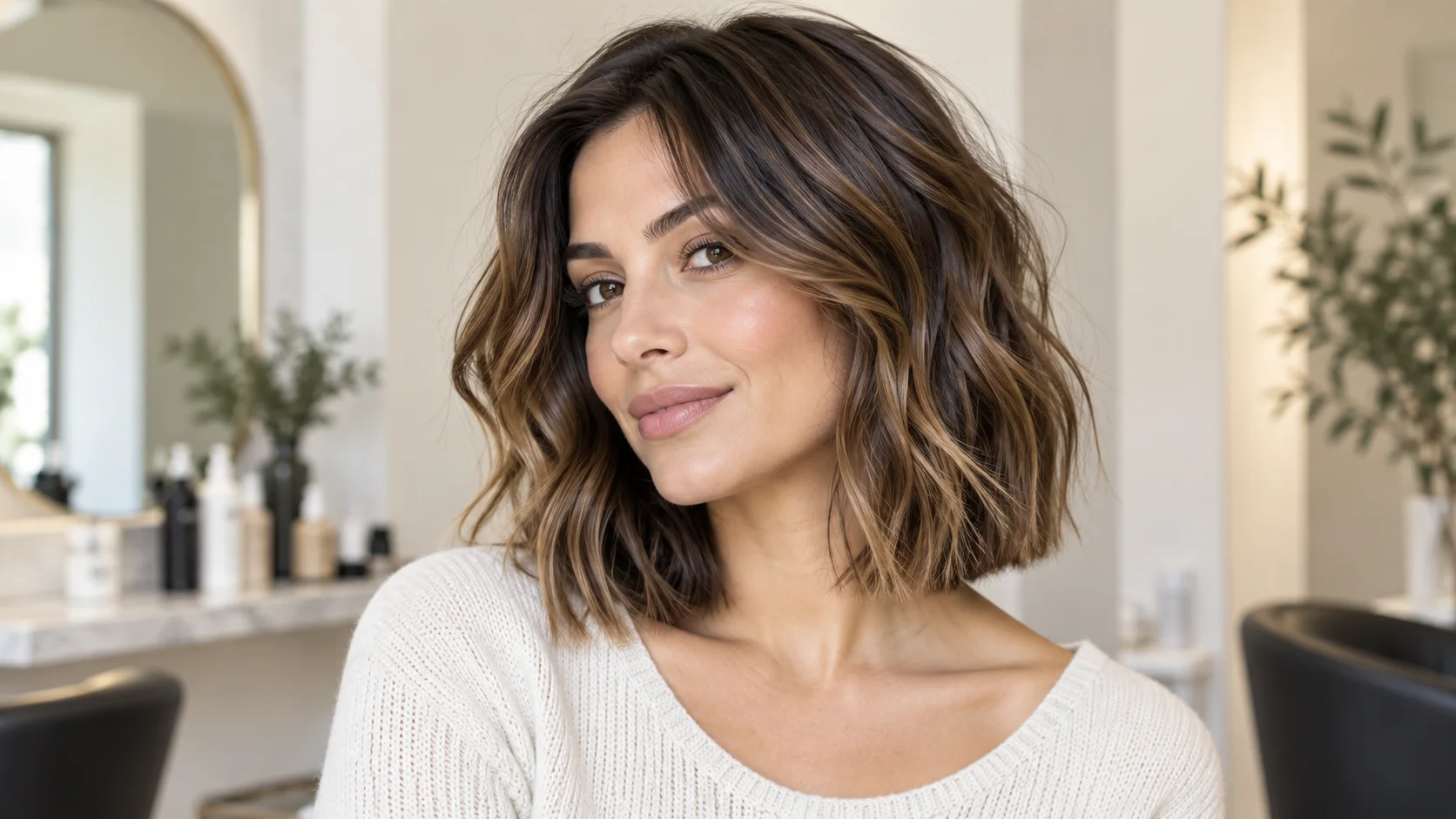
A lob is a longer bob, commonly sitting around the shoulders. A textured finish gives the shape movement rather than making every strand lie perfectly flat. It can feel relaxed with a T-shirt and more polished beside a tailored jacket, which makes it a versatile starting point for everyday styling.
How to Style a Textured Lob
Begin with detangled hair and choose your parting before shaping the lengths. If your hair already has a wave, work a small amount of your usual styling product through damp lengths and gently encourage that pattern. Let the ends keep a little variation instead of forcing them into identical bends.
On straighter hair, you can try a heatless method on slightly damp hair, then release it only once dry. The outcome depends on the method and your texture, so expect some experimentation. Our guide to heatless waves offers another way to explore movement without making a hot tool your daily starting point.
Make the Shape Your Own
A centre part gives the style a balanced appearance, while a side part changes the distribution of volume. Tuck one side behind your ear to show an earring or neckline. If you want the haircut itself, take reference images to a stylist and discuss your density, shrinkage and usual styling routine before choosing a length.
2. The Sleek Low Ponytail: Clean Lines for Busy Days
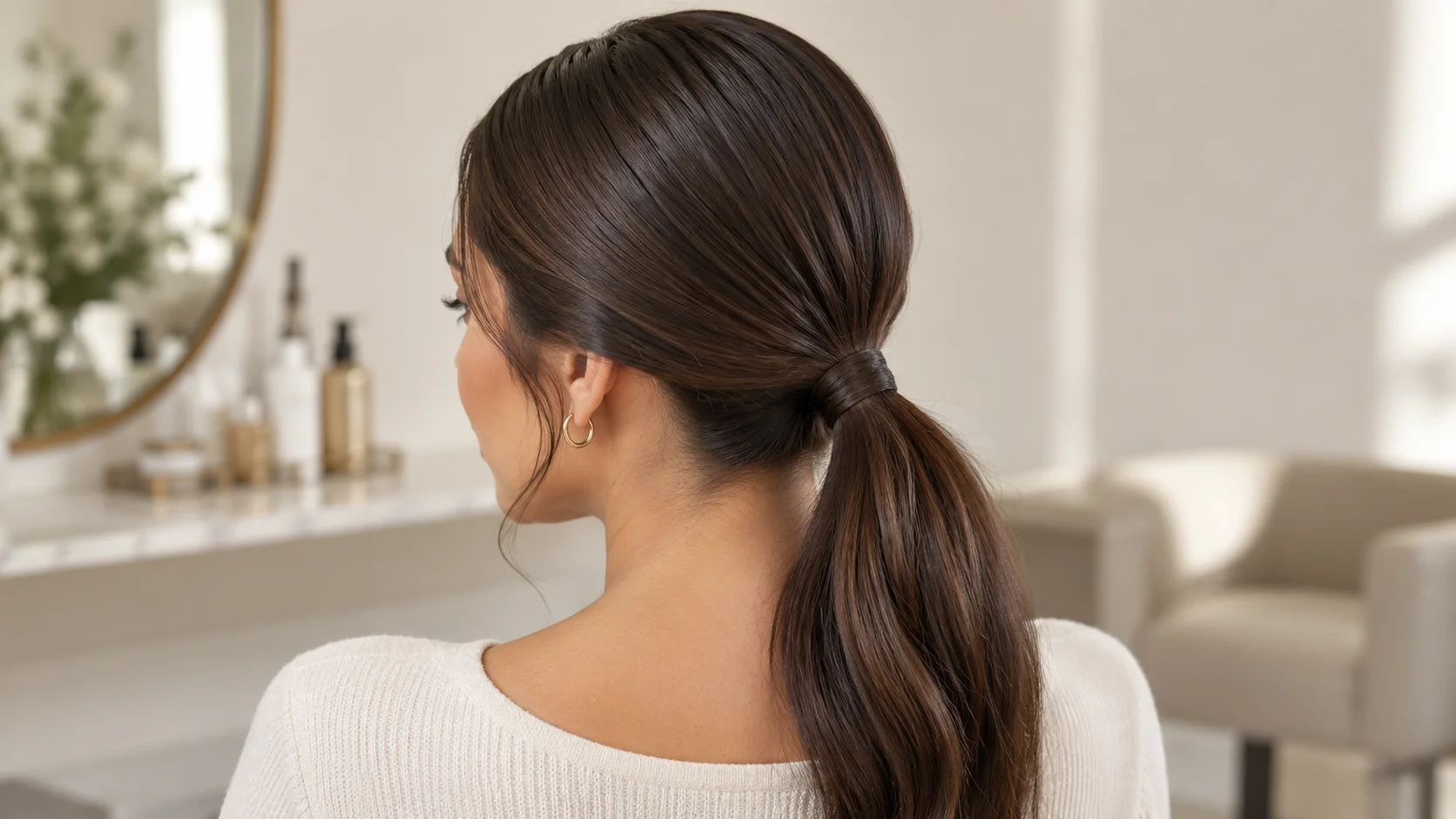
A low ponytail sits close to the nape rather than high on the head. Its appeal is the contrast between a tidy top section and free-moving lengths. It is a useful option for work, a dinner outfit or a morning when you want your face clear without creating a complicated updo.
Build a Smooth Shape Without Pulling Hard
Set your parting first, then gather your hair with your hands. Smooth the surface gently with a brush suited to your texture, concentrating on the areas you want to tidy. Secure the ponytail with a covered hair elastic and check that the hold feels comfortable rather than tight.
If you use a styling product, start with a small amount and add only where needed. A sleek appearance does not require flattening every short hair. Leave the tail straight, softly waved or naturally curly according to your existing texture. Avoid repeatedly tugging the ponytail tighter once it is secured.
Small Details That Change the Look
A slim ribbon or simple barrette can echo an outfit colour without turning the hairstyle into a costume. Keep accessories light enough that they do not drag on the ponytail. For a softer version, leave a small amount of face-framing hair loose. Smooth should describe the finish, not uncomfortable tension at your hairline.
3. Half-Up Hair With a Claw Clip: Practical and Relaxed
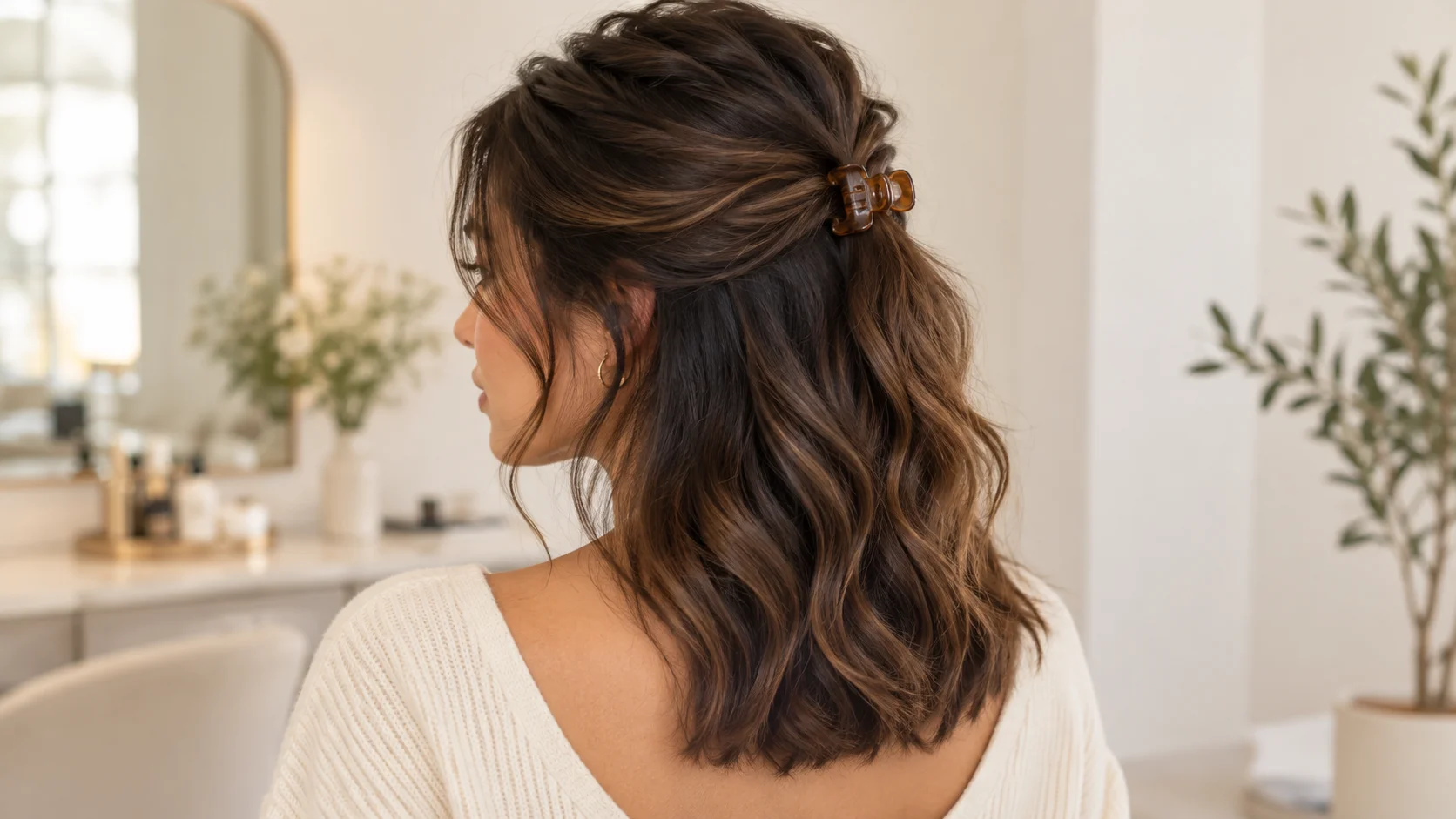
A half-up style gathers the upper section while leaving the lower lengths loose. It is especially useful when you like wearing your hair down but want the front pieces out of your way. A small claw clip adds a visible detail and can be easier to reposition than a tightly secured arrangement.
Choose the Right Amount of Hair
Take a section from above your ears and guide it towards the back of your head. Start with less hair than you think you need; you can add more if the clip feels secure. Twist the gathered section lightly, then close the clip around it without catching or scraping your scalp.
Check whether the clip can hold the section comfortably. If it keeps opening, use a slightly larger clip or a smaller section rather than forcing it shut. Fine hair may need a lighter accessory, while thick hair often needs more room inside the clip. The fit matters more than the accessory’s appearance.
Keep the Lower Lengths Natural
Let the loose hair follow its normal pattern. You can arrange a few front pieces with your fingers, but you do not need to restyle the entire head. This look pairs well with a casual shirt, knitwear or a simple dress. Try it alongside a calm getting-ready routine when you want fewer morning decisions.
4. Defined Natural Curls: Let Texture Lead the Style
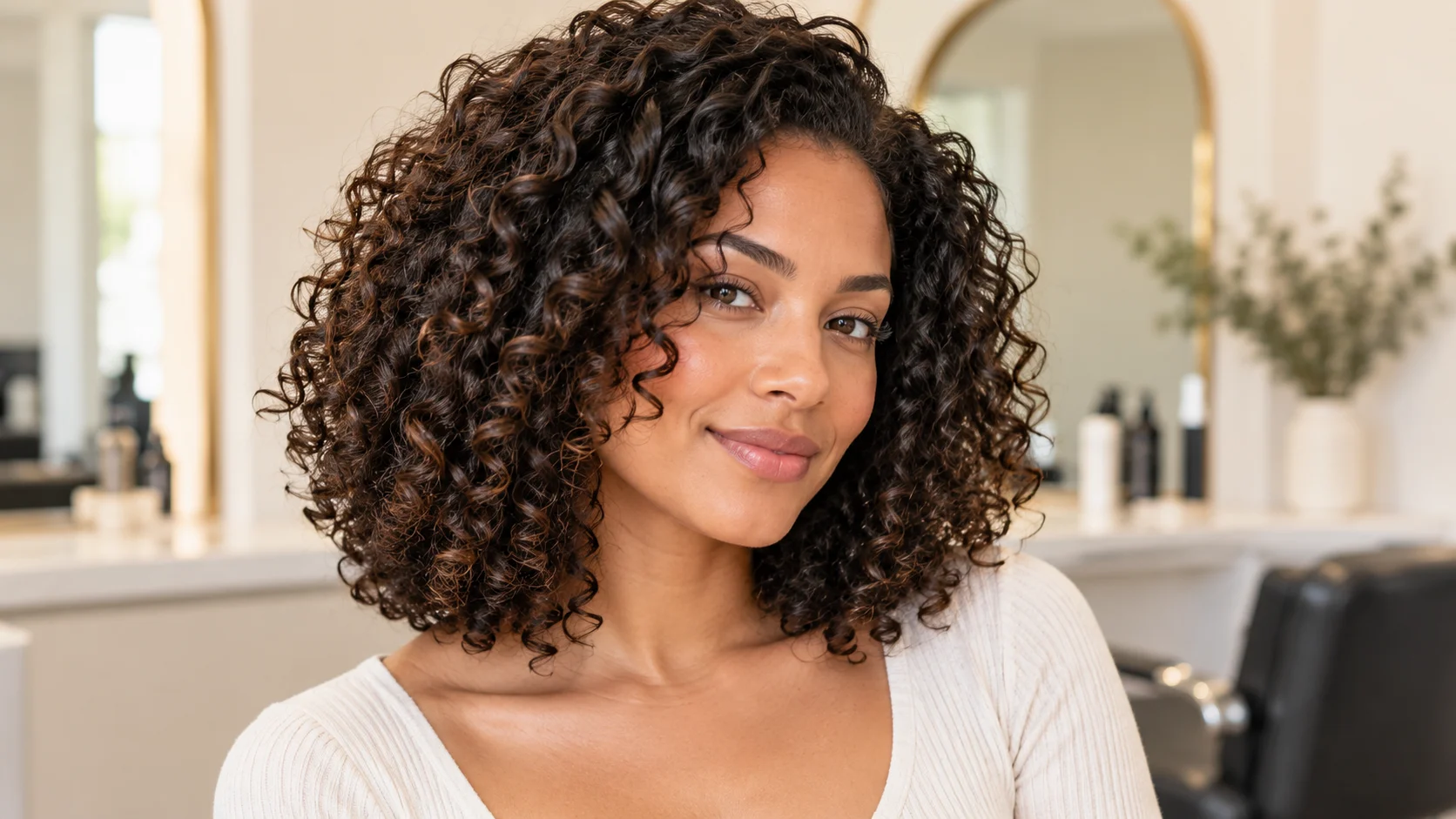
Defined curls can look distinctive without a complex arrangement. The aim is to bring out a curl pattern you already have, not to make every section identical. Some areas may curl more tightly than others, and that variation can be part of the finished shape rather than something to hide.
Style in Manageable Sections
After your usual wash and conditioning routine, divide damp hair into sections you can comfortably handle. Distribute your chosen curl product evenly, starting with a modest amount. Use your fingers or a suitable detangling tool to arrange the sections, then gently encourage the curls without repeatedly pulling them apart.
Let your hair dry with as little unnecessary handling as possible. Once dry, decide whether you prefer a more defined finish or a little extra volume. You can lift gently at the roots without dragging through the lengths. If your product leaves the hair feeling coated, adjust the amount on your next attempt.
Balance Definition and Volume
A rounded shape, a side part or a tucked-back section can change the look while keeping the same texture. There is no requirement to eliminate every flyaway. Our soft volume hair guide explores movement and shape when you prefer a less rigid finish. Choose the balance that feels like you.
5. The Loose Side Braid: An Easy Way to Wear Longer Hair
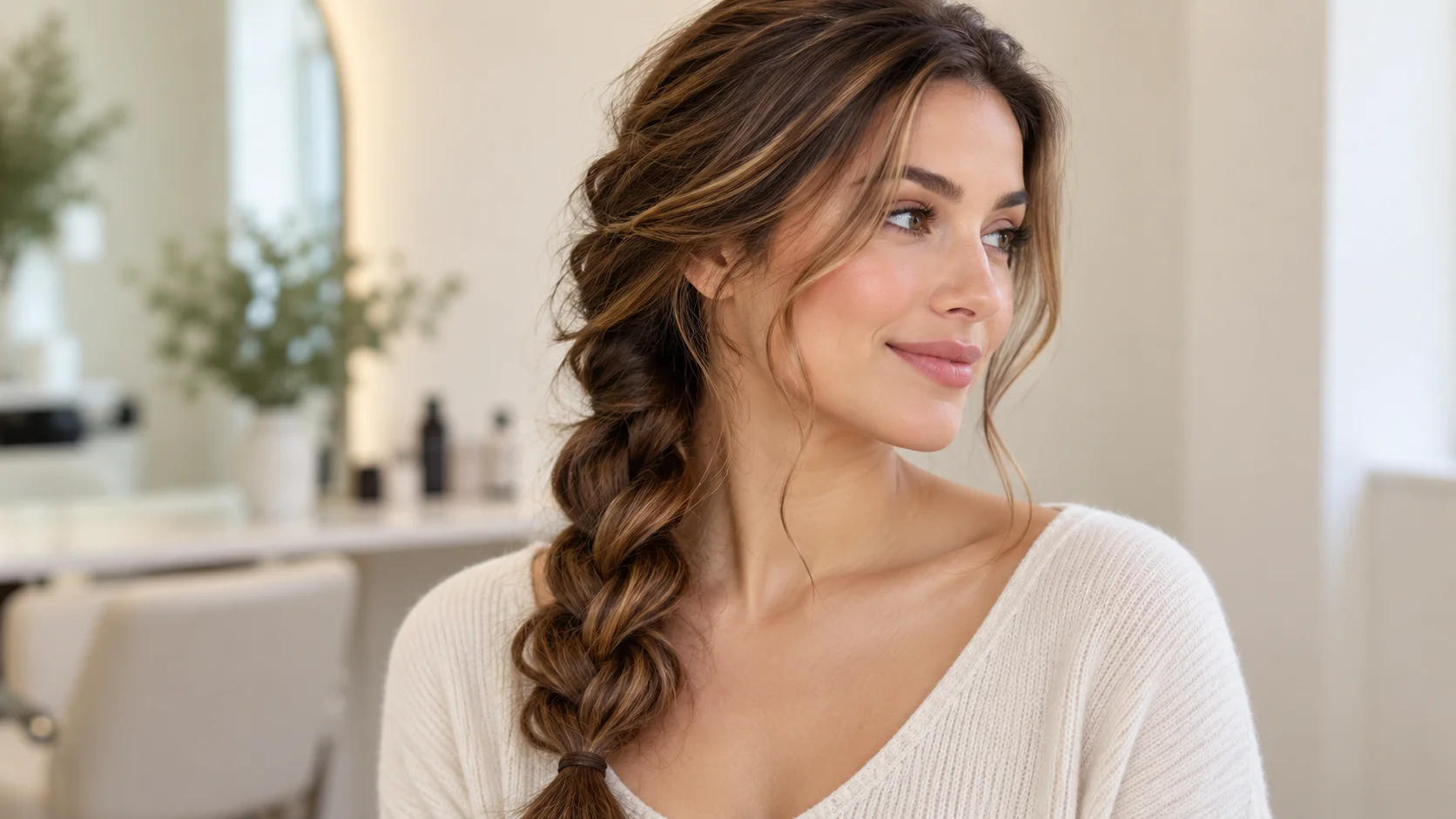
A side braid brings the hair over one shoulder, making the detail visible from the front. A simple three-strand plait is enough to create the look. It suits many casual outfits and can also work beside an open neckline when you want an alternative to wearing all your hair loose.
Create a Comfortable Three-Strand Braid
Gently detangle the lengths and gather them towards one side. Divide the hair into three sections, then alternate the outer sections over the middle section. Keep the movement controlled but the hold relaxed. Secure the end with a covered elastic before adjusting the shape.
If you want a fuller appearance, ease the outer edges of the braid slightly with your fingers. Stop if the sections begin to unravel or your shorter layers slip out too much. Face-framing strands can stay loose, and the braid does not need to start tightly against the scalp.
Adapt It to Your Length
Longer hair usually gives you more room for a visible side braid. With shorter layers, a smaller plait or a partly braided section may be easier than gathering everything. Try the style before an event so you know how it behaves when you move. Keep spare elastics handy rather than over-tightening the first one.
Keep Your Styling Routine Gentle
Comfort is a useful check for any of these cool hair styles. If an elastic, braid or clip feels uncomfortable, loosen or reposition it. Rotate between loose hair and gathered styles instead of repeatedly pulling the same sections in the same direction.
The American Academy of Dermatology’s hair-care guidance recommends loose styling, covered hair bands and reducing heat exposure. If you use hot tools, avoid unnecessary repeat passes and follow the tool’s instructions. For everyday habits around washing and handling, read our healthy hair care guide.
Find Your Everyday Favourite
You do not need to master all five looks at once. Choose one that matches your current length, try it a few times and change one detail at a time. A different parting, a lighter clip or a looser finish can make a familiar hairstyle feel new. The best cool hair styles are the ones you enjoy wearing and can comfortably repeat.