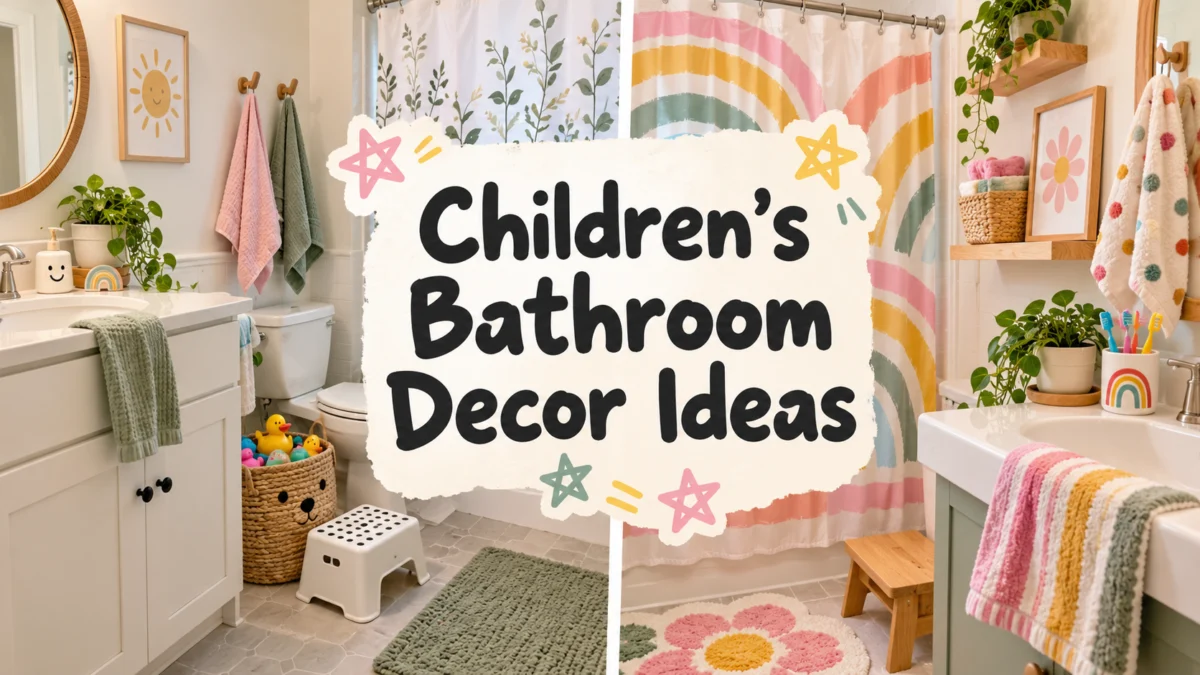
A children’s bathroom should feel cheerful when your little one walks in and manageable when you need to clean it. The most useful spaces balance personality with practical details: a towel within reach, a clear countertop, and somewhere for wet bath toys to dry.
For mums planning a refresh, the challenge is finding a look that works for children while feeling connected to the rest of the home. You might love soft colours and coordinated accessories, while your child wants dinosaurs, mermaids, or every colour of the rainbow.
These children’s bathroom decor ideas bring both preferences together. From playful shower curtains to organised vanity drawers, they focus on changes that make everyday routines easier while leaving room for your child’s personality.
1. Start With a Flexible Colour Palette
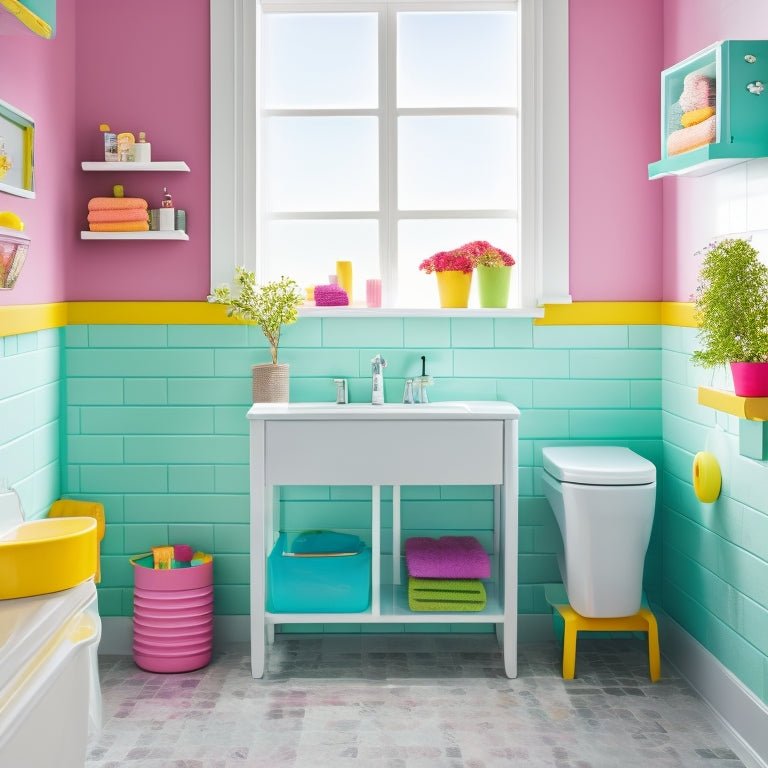
Choose a simple background before buying themed accessories. Warm white, pale blue, soft sage, and creamy beige give colourful details room to stand out without making the bathroom feel busy.
A useful starting point is one background colour, one supporting shade, and a smaller accent. White walls, a sage shower curtain, and peach towels create a gentle combination. Navy, white, and mustard offer stronger contrast.
Consider the finishes already in place. If your floor has warm brown tones, creamy neutrals may feel more connected than icy grey. Try paint samples in daylight and under the bathroom lights before committing.
For mums coordinating several rooms, repeat one colour from the hallway or adjoining bedroom. That small connection helps a playful bathroom feel like part of the home.
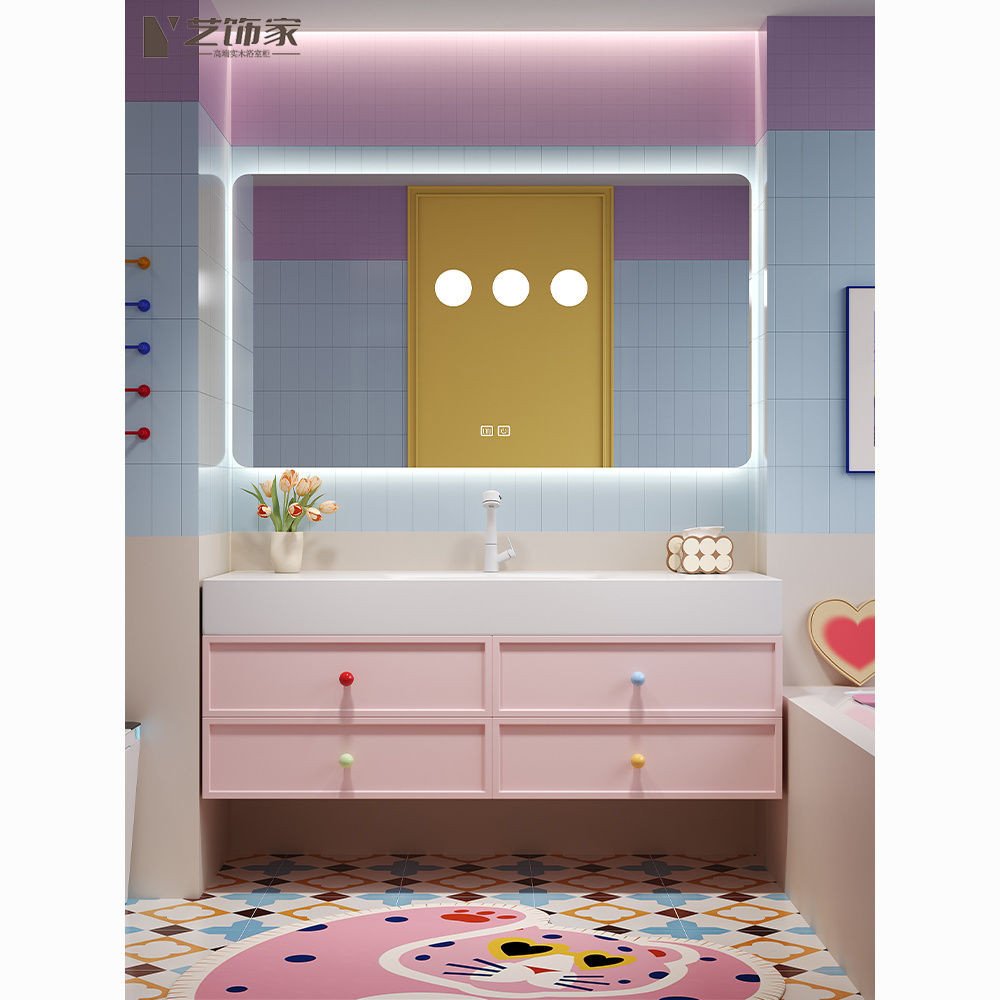
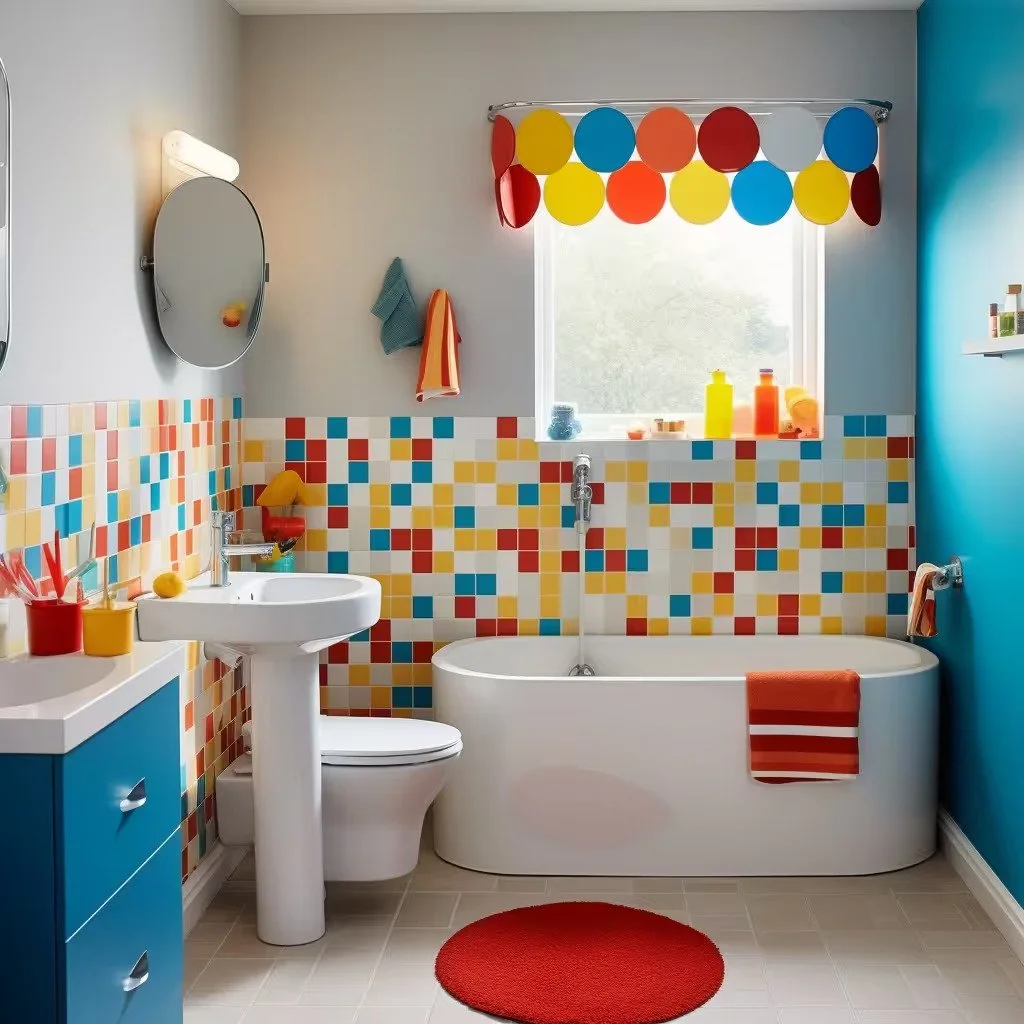
2. Choose a Theme That Can Grow With Your Child
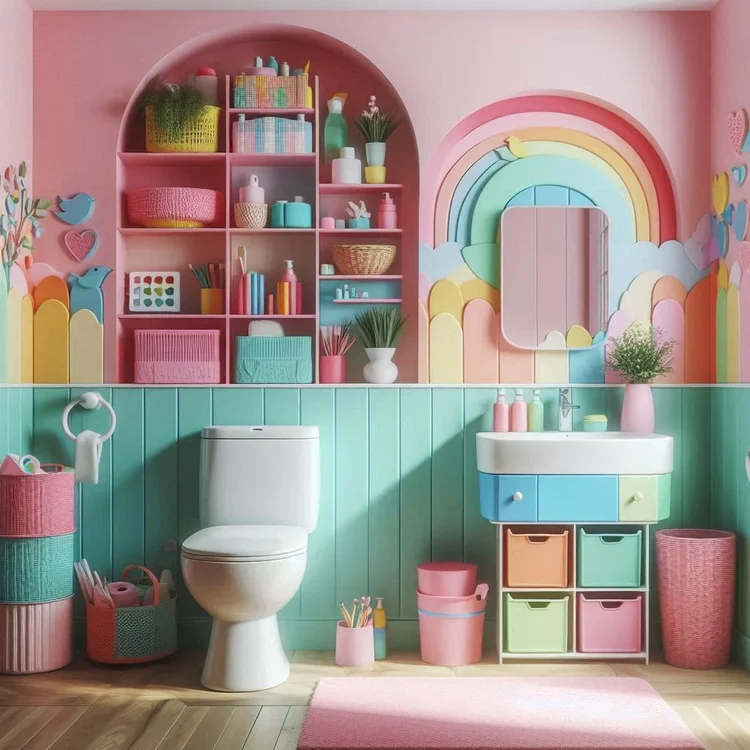
A theme works best when it guides a few details rather than covering every surface. Ocean animals, woodland creatures, rainbows, botanical prints, and space motifs all offer flexibility.
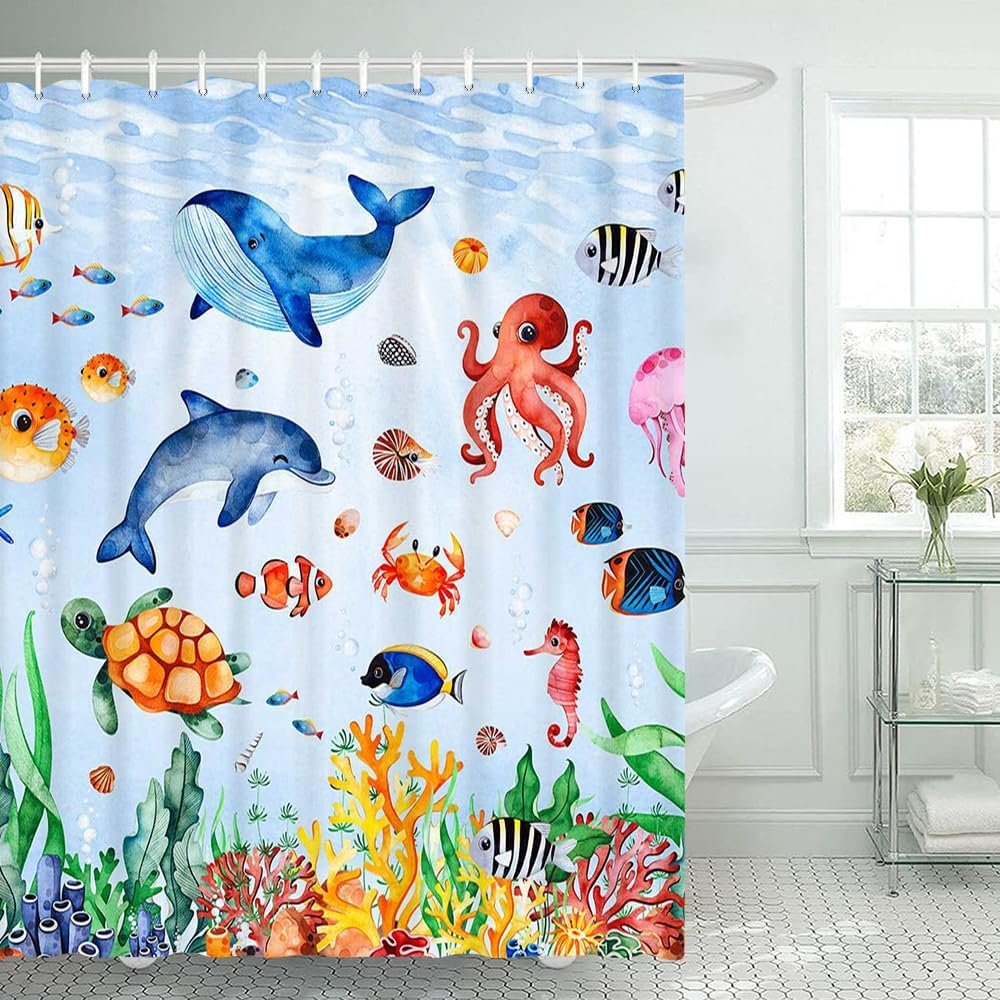
For an ocean-inspired bathroom, combine blue towels with a sea-life print and a simple striped curtain. You do not need fish-shaped versions of every accessory.
If your child loves a particular character, introduce it through something easy to replace, such as a toothbrush cup or framed picture. Keep expensive fixtures and permanent finishes more adaptable.
Invite your child to choose between two options you already like. This gives them a meaningful role while helping the finished room feel coordinated. Save pictures of their choices together before shopping to check whether the colours work.
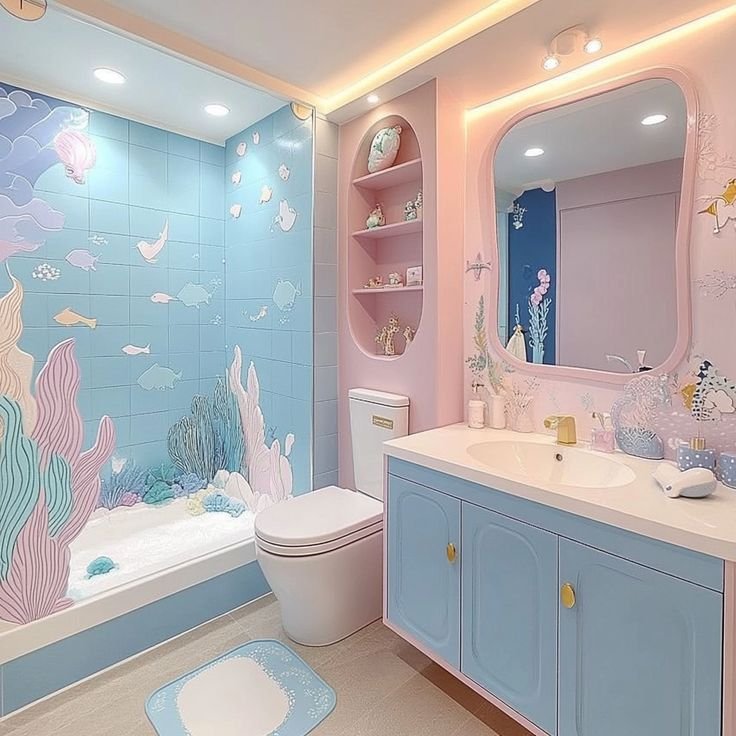
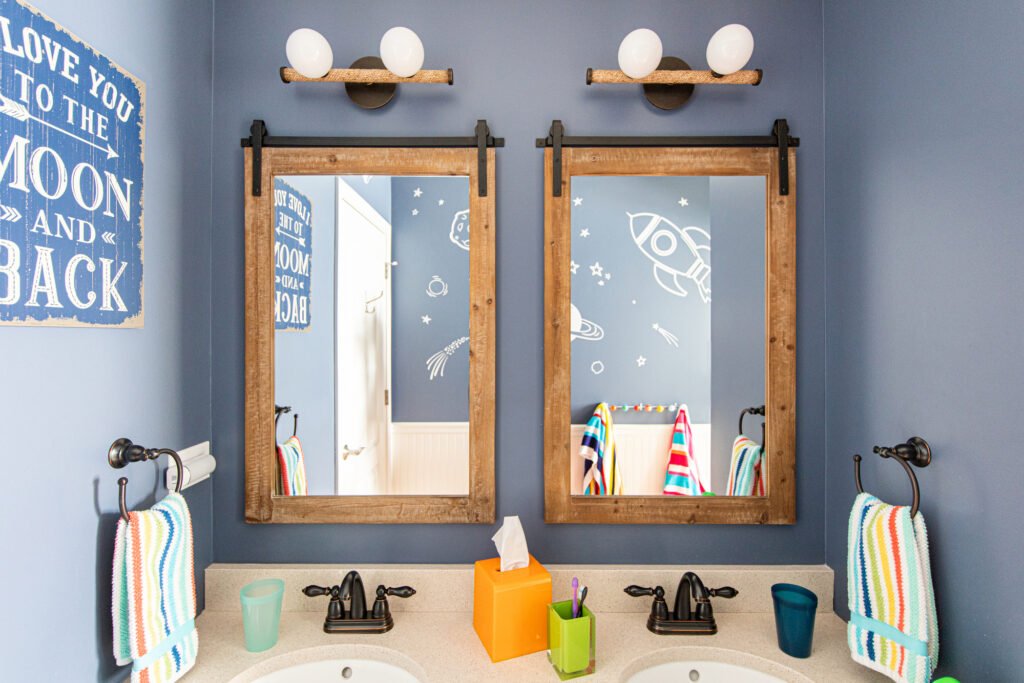

3. Make the Shower Curtain Your Statement Piece
A shower curtain covers a large visual area, making it an effective place to introduce colour or pattern without renovating.
Oversized flowers, cheerful stripes, small animals, or abstract shapes can provide a starting point for the room. Pick one or two colours from the curtain for towels and storage containers.
Check the dimensions before ordering, including the height of your curtain rail. Follow the care instructions and choose a material you can maintain comfortably.
In a compact bathroom, a light background can keep a patterned curtain from feeling overwhelming. If the walls already have wallpaper or decorative tiles, a simpler curtain gives the eye somewhere to rest. Allow the curtain to dry properly between uses rather than leaving it tightly bunched.


4. Add Personality With Bathroom Wall Decor
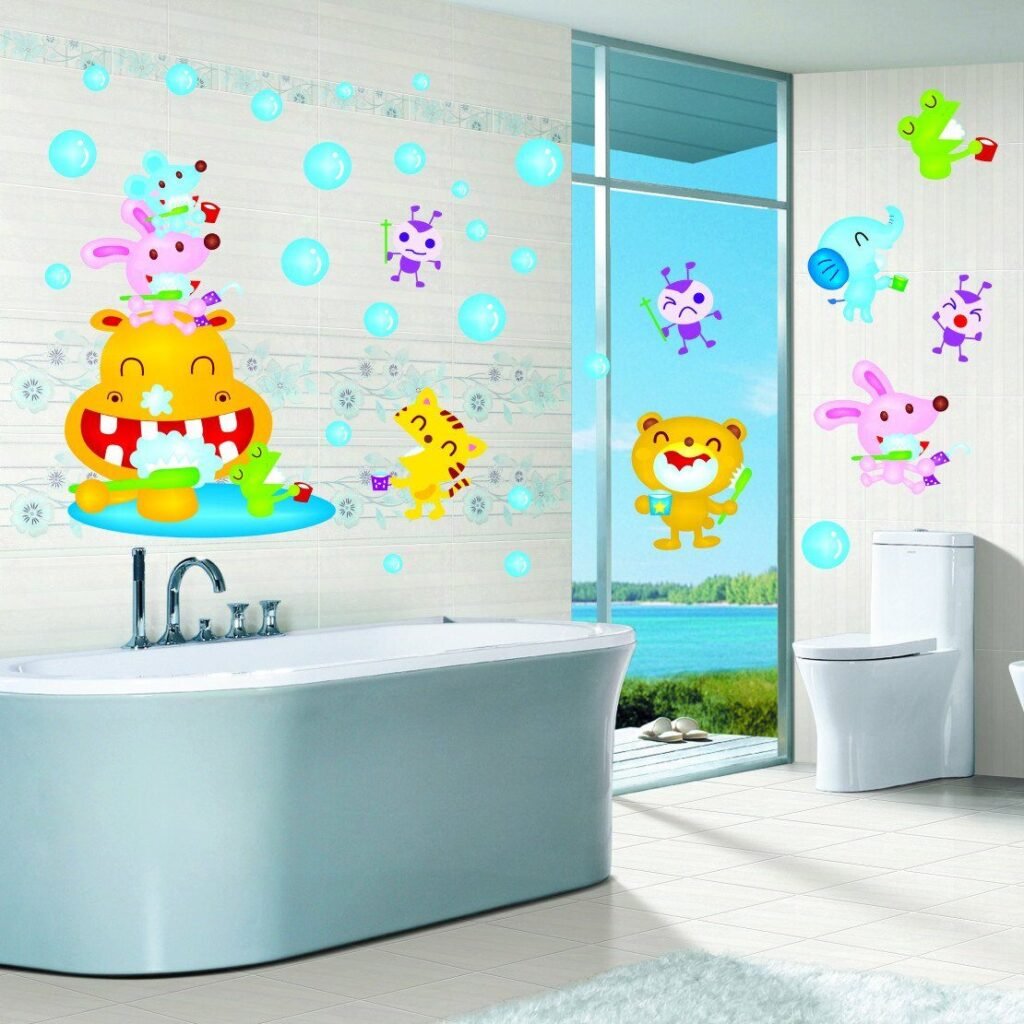
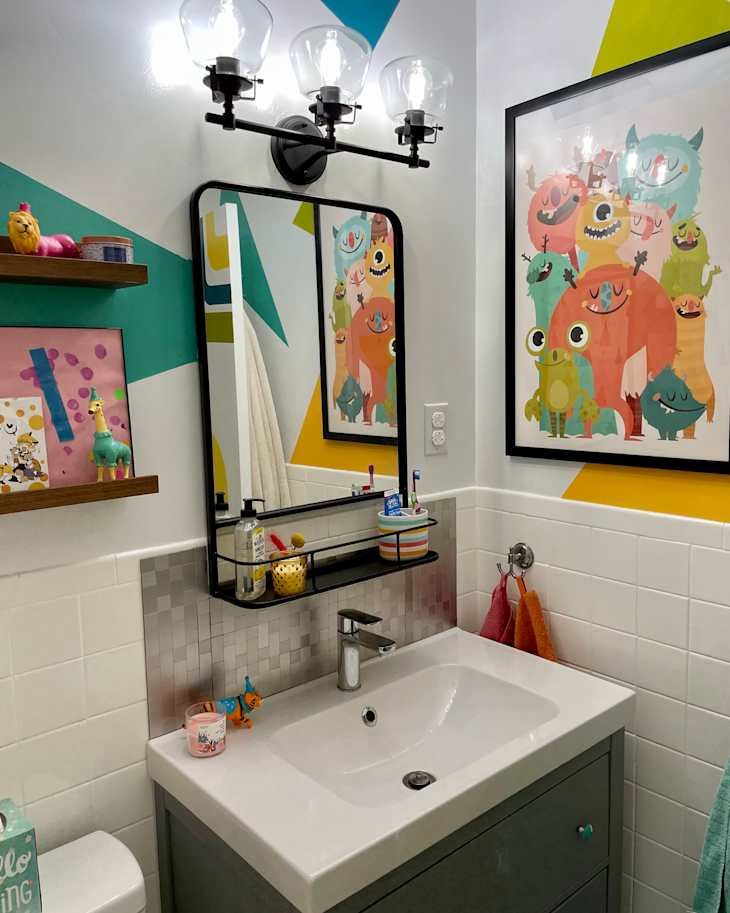
Wall decor can make a bathroom welcoming without taking up counter space. A small collection of animal illustrations, colourful shapes, or alphabet prints adds interest above a towel rail or on a dry wall.
Choose frames suited to humid conditions and position artwork away from direct splashes. Lightweight, shatter-resistant options are worth considering in children’s spaces.
Removable decals offer another approach, especially for renters. Check that the product suits the wall finish and bathroom conditions, then test a discreet area first.
Avoid filling every available wall. One clear focal point often looks more intentional than several competing arrangements, particularly when towels, toys, and toiletries already bring colour into the room.


5. Give Every Child Their Own Towel Hook
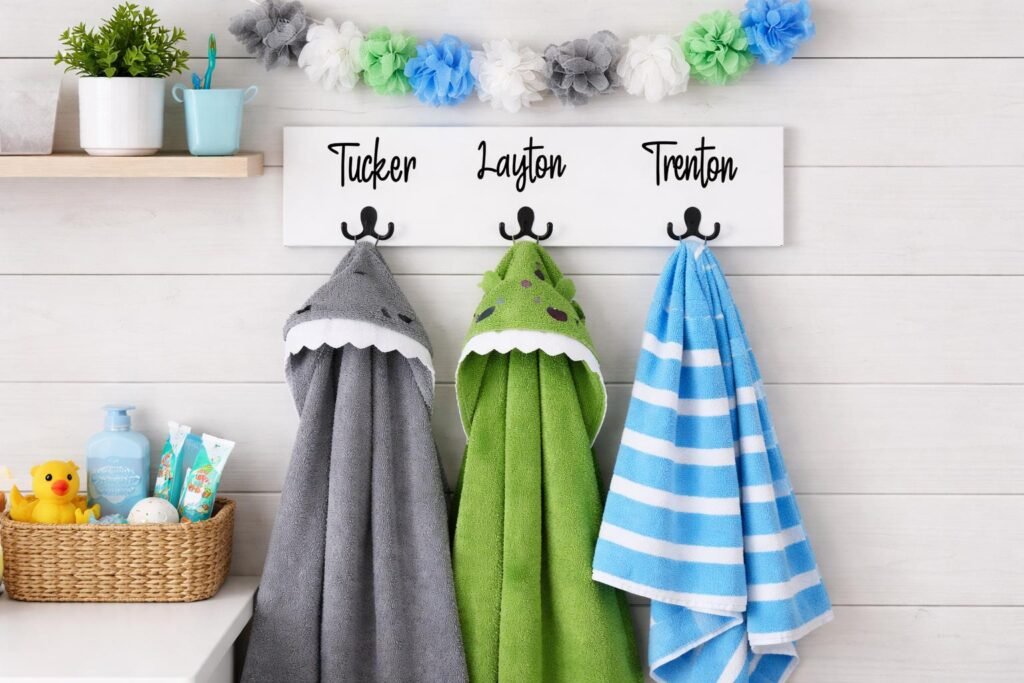
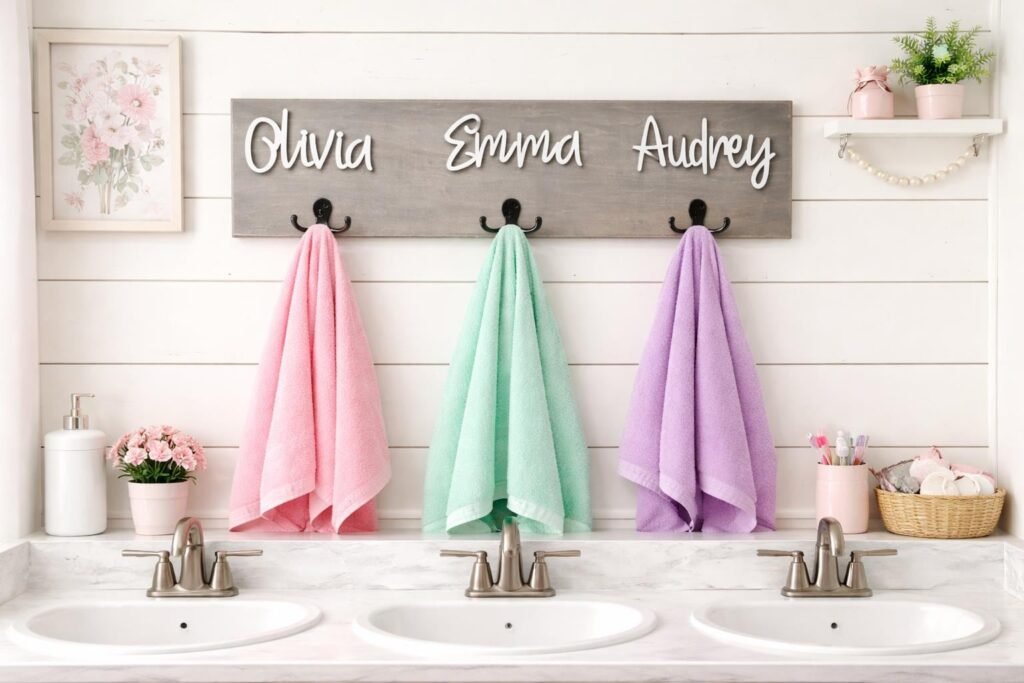
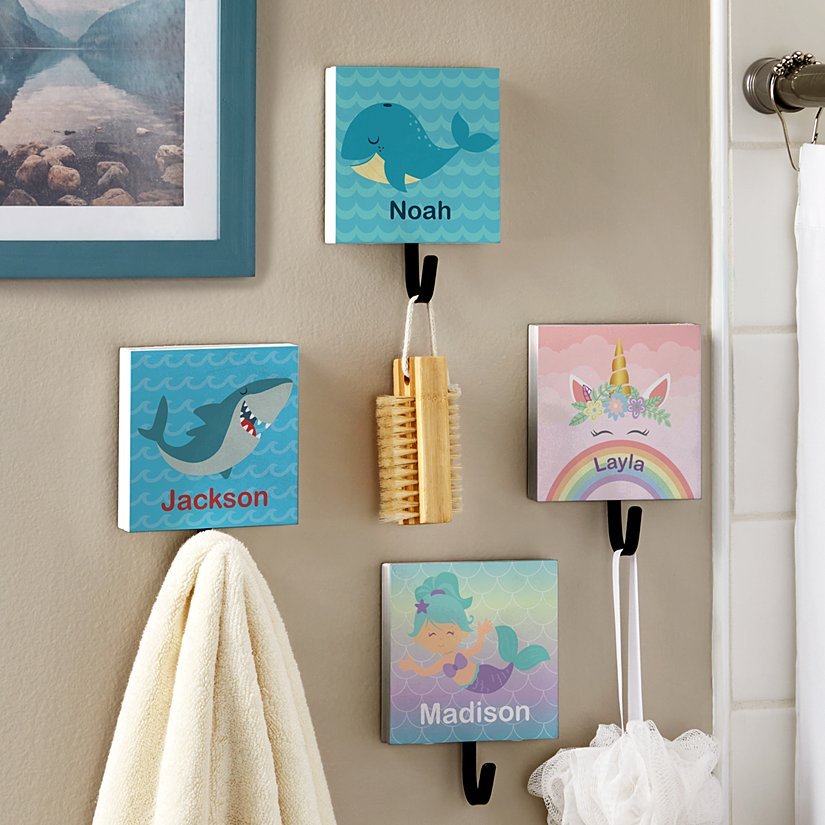
Individual towel hooks make a shared bathroom easier to organise. Assign each child a colour, name label, or simple symbol so they can recognise their place.
Position hooks at a height that suits the child using them, while checking that towels hang clear of the floor. Allow enough space between hooks for damp fabric to spread out.
Choose smooth, securely fitted hardware and fixings appropriate for the wall. A decorative hook is only useful if it can handle everyday use.
Repeat each child’s identifying colour on their toothbrush holder or storage basket. These small connections can make putting things away easier without adding more written instructions.

6. Organise the Vanity Around Daily Routines
Start with what happens at the sink: washing hands, brushing teeth, brushing hair, and getting ready for bed. Arrange storage around those tasks.
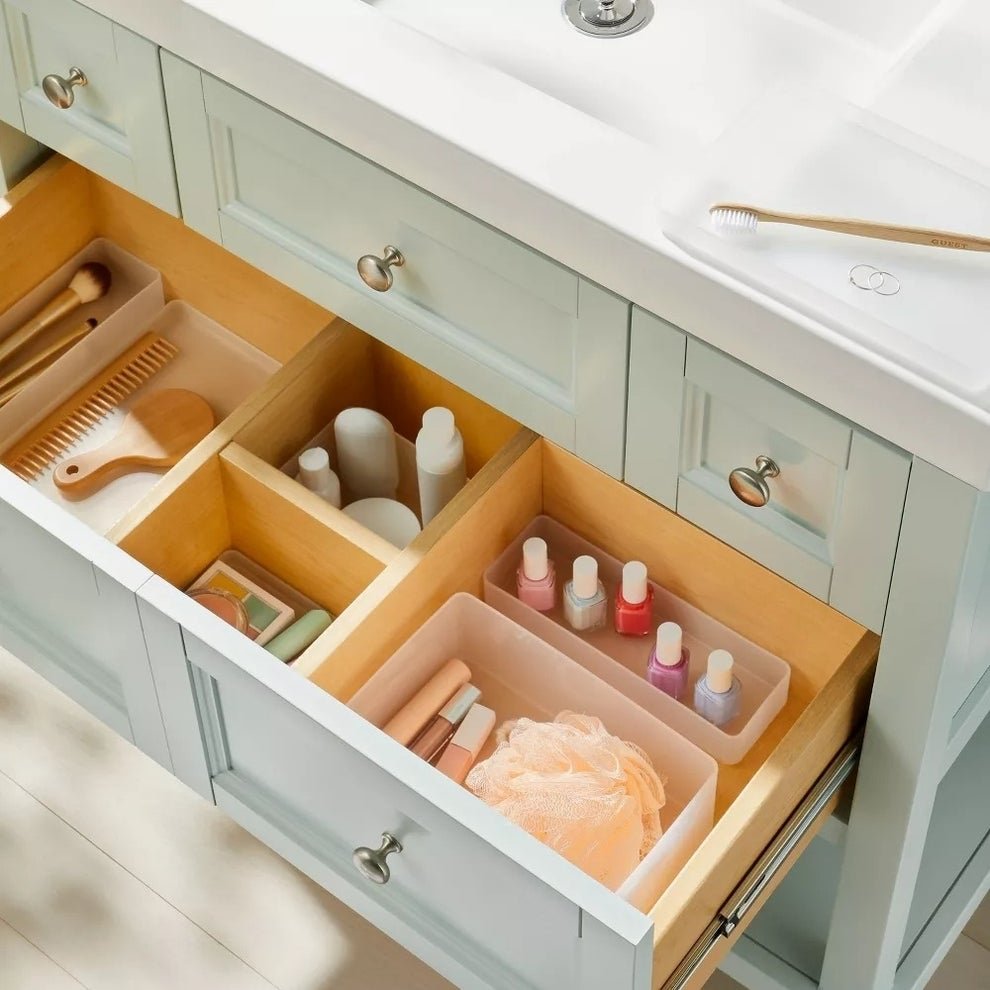
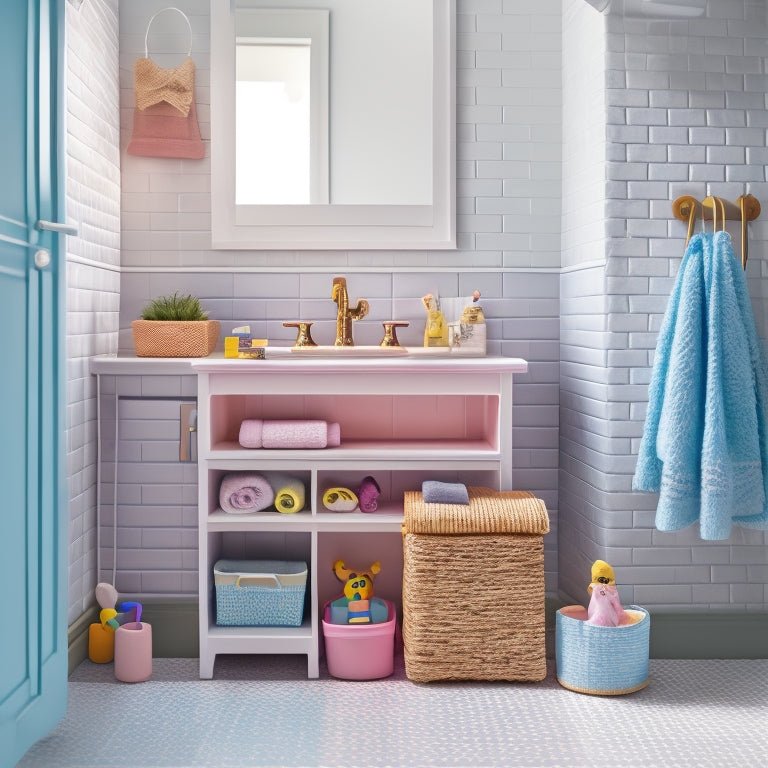
Keep everyday essentials together in a washable tray or divided drawer. Separate each child’s toothbrush and personal items, leaving enough room for them to be returned easily.
A clear countertop is usually more practical than a display of matching containers. Before adding an accessory, consider whether it helps the routine or simply needs cleaning.
Open storage can work for towels and washcloths. Medicines, cleaning products, razors, and other hazardous items need secure storage inaccessible to children; a high shelf alone should not be treated as a complete safeguard.


7. Create a Practical Bath Toy Station
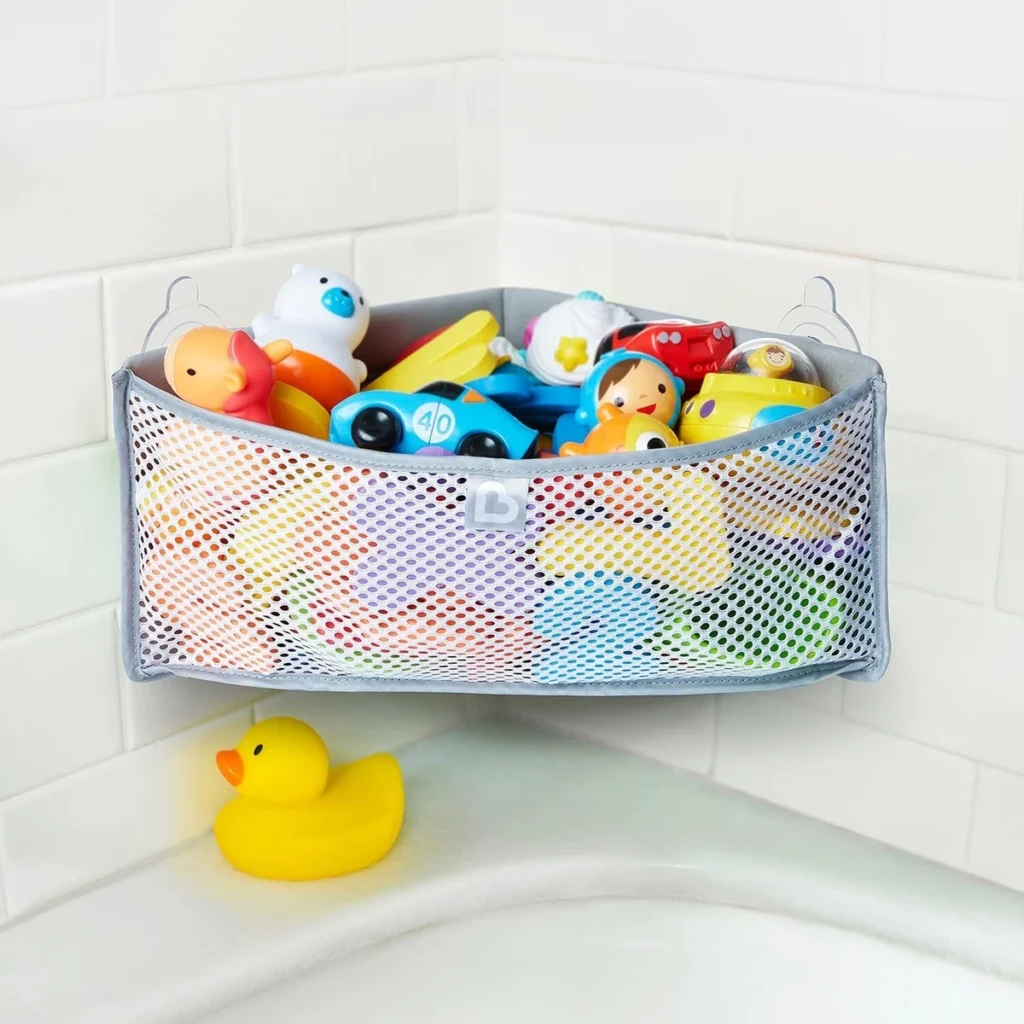
Bath toys need a home that allows water to drain. A ventilated basket, draining caddy, or purpose-made toy organiser can keep the tub edge clear.
Choose an option you can remove and clean easily. Check attachment instructions and weight limits rather than assuming a suction-mounted basket will hold any load.
Keep the collection manageable. Rotating a smaller selection can reduce clutter and make it easier to inspect each item.
After bath time, drain the toys and allow them to dry. Follow their cleaning instructions and remove damaged items or toys that cannot be cleaned properly. Storage should support this routine instead of trapping everything in a closed, damp container.


8. Choose a Suitable Step Stool
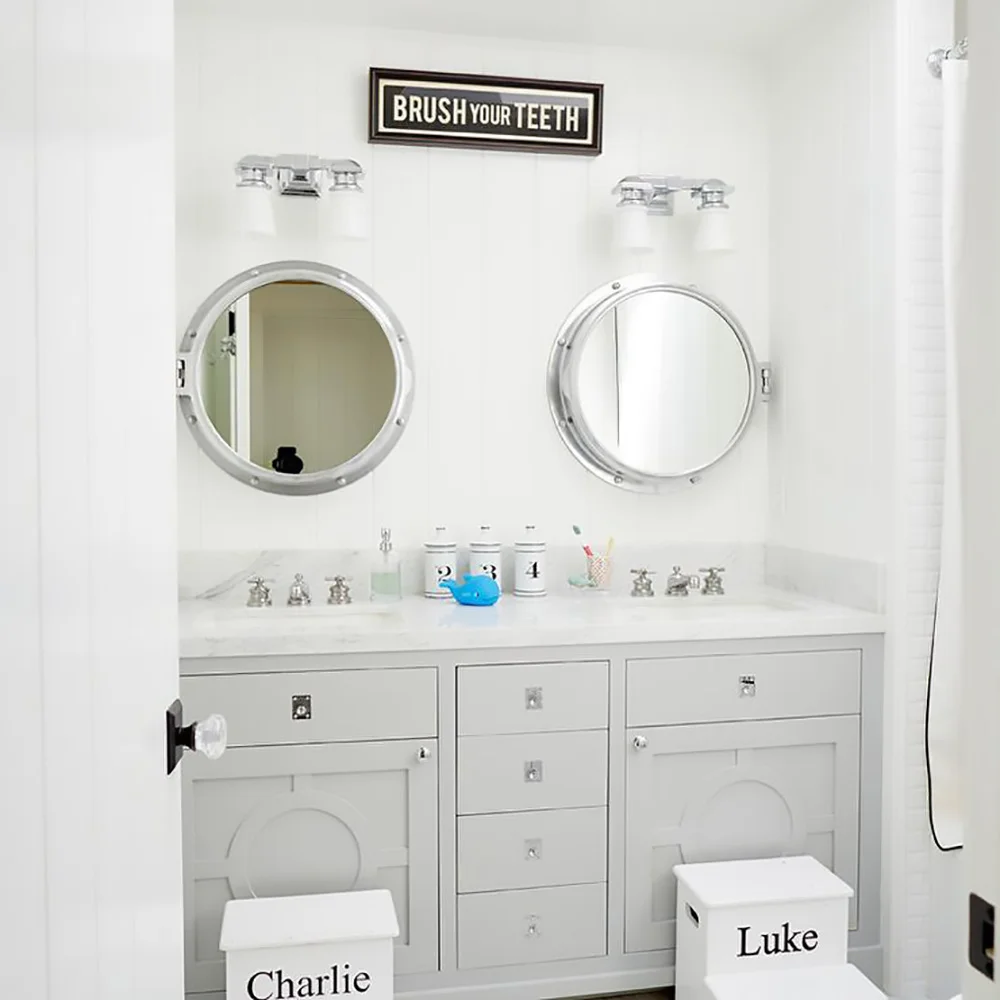
A step stool can help children reach the basin, but its fit matters more than its appearance. Check the height, footprint, weight limit, and suitability for the intended user.
Look for a stable design with a slip-resistant standing surface and feet. Place it on a level floor and keep the stool and surrounding area dry.
Avoid improvising with stacked stools, storage boxes, or lightweight furniture. Even a sturdy-looking decorative item may not be designed for standing.
For a coordinated look, choose a stool that repeats an existing colour. White suits a neutral bathroom, while muted yellow or blue adds a playful accent without introducing another pattern.


9. Layer Lighting for Different Tasks
Bathroom lighting needs to support washing, grooming, and cleaning. An attractive ceiling light may still leave shadows around the mirror, so assess the room when your family actually uses it.
Choose fittings suitable for their bathroom location and have electrical changes assessed by a qualified electrician.
If your child dislikes a brightly lit room during nighttime visits, consider an appropriate night-light positioned away from water and accessible cords.
Think about reflections, too. A mirror can help distribute available light, but it should be securely installed. Decorative lighting should complement clear, usable illumination rather than becoming the room’s only light source.


10. Make a Small Bathroom Feel Less Crowded
Small children’s bathroom decor works best when every addition earns its space. Start by removing unused toiletries, duplicate accessories, and toys that no longer get played with.
Use the inside of vanity drawers before adding freestanding furniture. Slim organisers and divided compartments can improve storage without narrowing the walkway.
Keep frequently used items accessible, but reserve higher storage for appropriate items such as spare towels. Avoid arrangements that encourage children to climb.
Repeating a few colours can make the room feel calmer. A matching towel, curtain detail, and storage bin create a connection without requiring an entire coordinated product set. Check that the door opens fully after moving any furniture.


11. Balance a Shared Sibling Bathroom
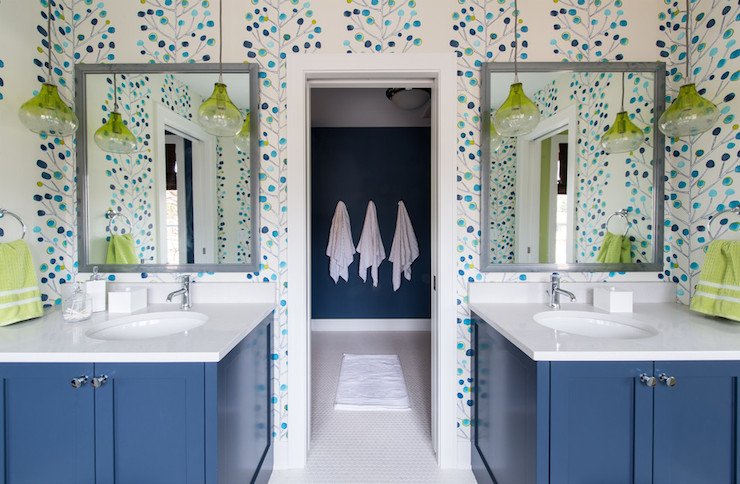
A shared bathroom needs common ground and a little personal space. Begin with a background everyone can live with, then give each child a small area to personalise.
Separate towel hooks, drawer sections, and toiletry containers can reduce confusion. Where space allows, label baskets with names or symbols.
You do not need a double vanity to create a workable arrangement. A single sink with clear storage zones may suit the room better than squeezing in larger furniture.
For siblings of different ages, keep the main decor adaptable. A striped shower curtain and colourful towels work across age groups, while individual accessories reflect changing interests.


12. Choose Finishes That Simplify Cleaning
Before buying an accessory, picture cleaning it after a busy week. Smooth containers, washable textiles, and organisers with removable sections are often easier to maintain than intricate decorative pieces.
Check care labels rather than relying on claims such as “easy clean.” Some baskets tolerate wiping, while others are unsuitable for repeated moisture exposure.
Use bathroom-appropriate coatings and materials, particularly near splash zones. Removable wallpaper needs explicit suitability for the intended conditions.
Moisture management matters alongside material choice. The US Environmental Protection Agency recommends controlling moisture and improving ventilation to help prevent recurring bathroom mould. Address leaks promptly instead of covering moisture damage with new decor.


13. Refresh the Room on a Budget
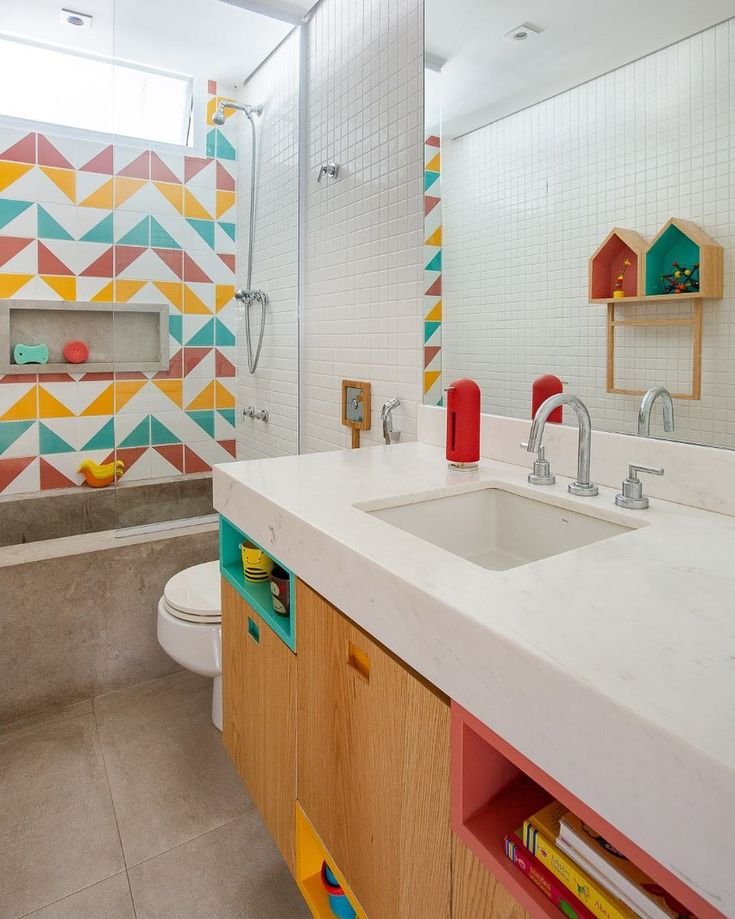
A coordinated refresh does not require replacing the vanity, flooring, and tiles together. Identify the feature making the room feel dated or disorganised, then start there.
A new shower curtain, fresh towels, or better drawer organisation may deliver a more noticeable improvement than several ornaments.
Shop around a colour palette rather than a matching collection. Plain towels and simple containers are easier to replace individually when something wears out.
Keep useful existing pieces. An undamaged mirror or practical vanity can remain part of the design while surrounding accessories change. Spend first on function, then use the remaining budget for details your child enjoys. Measure available space before ordering storage to avoid buying attractive pieces that do not fit.

14. Adapt the Decor as Children Grow
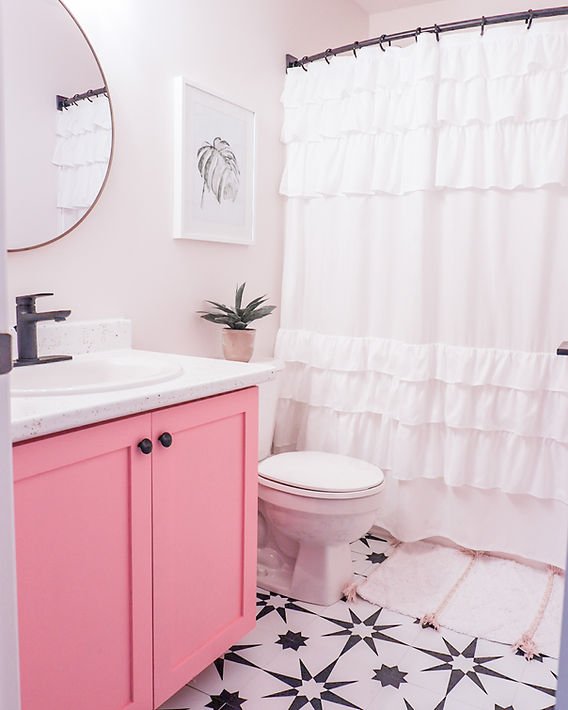
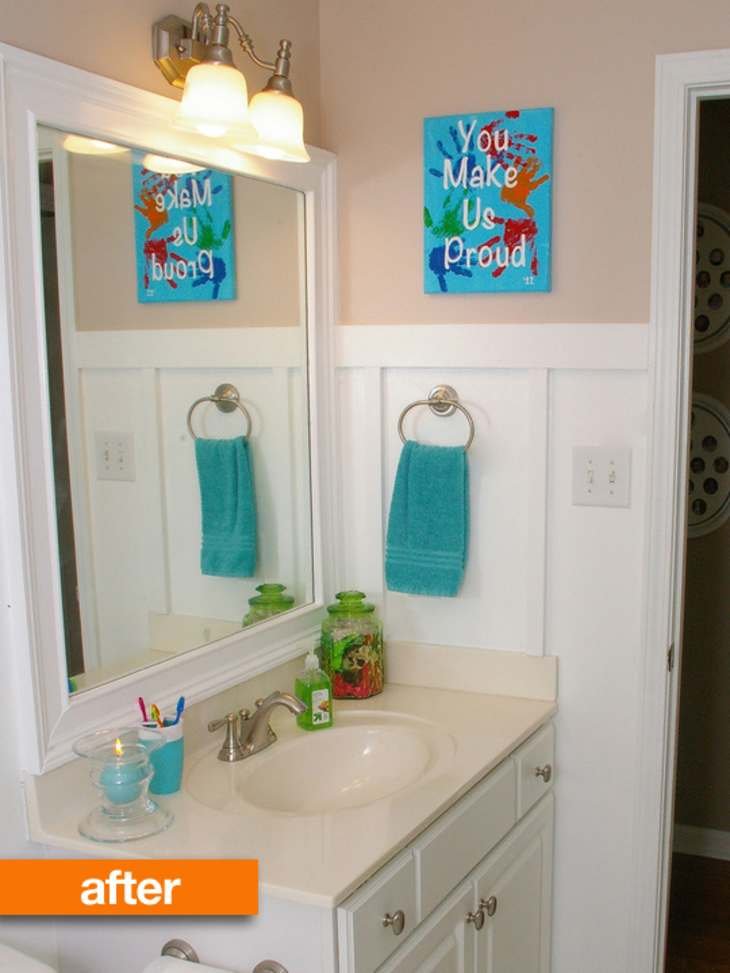
A bathroom that works for a toddler will need adjustments as independence, height, and preferences change. Plan for those changes through replaceable accessories.
Younger children may respond well to picture labels, familiar colours, and a small selection of visible essentials. Older children may prefer more private storage and fewer themed decorations.
Let the room evolve gradually. Replace a character curtain with stripes, update artwork, or change towel colours while keeping permanent finishes.
Review storage periodically, too. A basket that once held bath toys might later store hair accessories. Flexible organisation keeps the bathroom useful without requiring a complete redesign whenever interests change.

15. Keep Safety Part of the Design
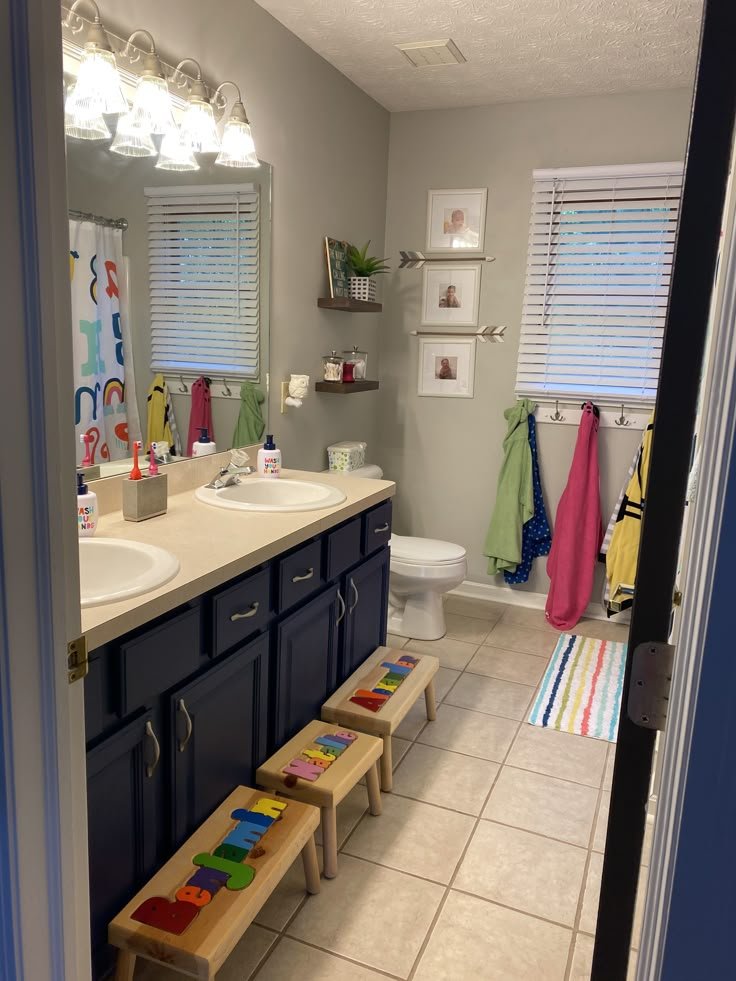
Decor choices should support a practical bathroom setup. Keep walkways clear, secure furniture and mirrors appropriately, and choose floor coverings that stay in place.
The American Academy of Pediatrics recommends measures including no-slip bathtub strips, keeping hazardous items inaccessible, and limiting the hottest faucet water to no more than 120°F, or about 49°C. This is a maximum safety recommendation, not a suggested bath temperature.
A beautifully organised room still requires supervision. Babies and young children should never be left alone in the bath, even briefly. Prepare towels and essentials beforehand so the routine does not require stepping away.
Frequently Asked Questions
What are the best colours for a children’s bathroom?
Soft blue, sage, warm white, and peach offer flexible starting points. Choose shades that complement existing finishes, then introduce brighter colours through towels, artwork, or a shower curtain.
How can I decorate without renovating?
Update the shower curtain, introduce coordinated towels, add suitable wall art, and improve vanity storage. These changes create a connected look while keeping existing fixtures.
How do I make a kids’ bathroom less cluttered?
Reduce items on display and give essentials a clear place. Use drawer dividers, personal containers, and draining toy storage. Leave countertop space empty for daily use.
Is wallpaper suitable for a children’s bathroom?
Suitability depends on the product, ventilation, wall preparation, and moisture exposure. Follow manufacturer instructions and keep unsuitable materials away from direct splashes.
How can I include my child’s favourite theme tastefully?
Introduce the theme through a few replaceable details, such as artwork and towels. Repeat their colours elsewhere and keep larger finishes simple so future updates remain manageable.
Sources and Further Reading
For practical bathroom safety guidance, see the American Academy of Pediatrics’ bathroom safety advice and baby bathing guidance. For moisture management, read the EPA guide to mould, moisture, and your home.