
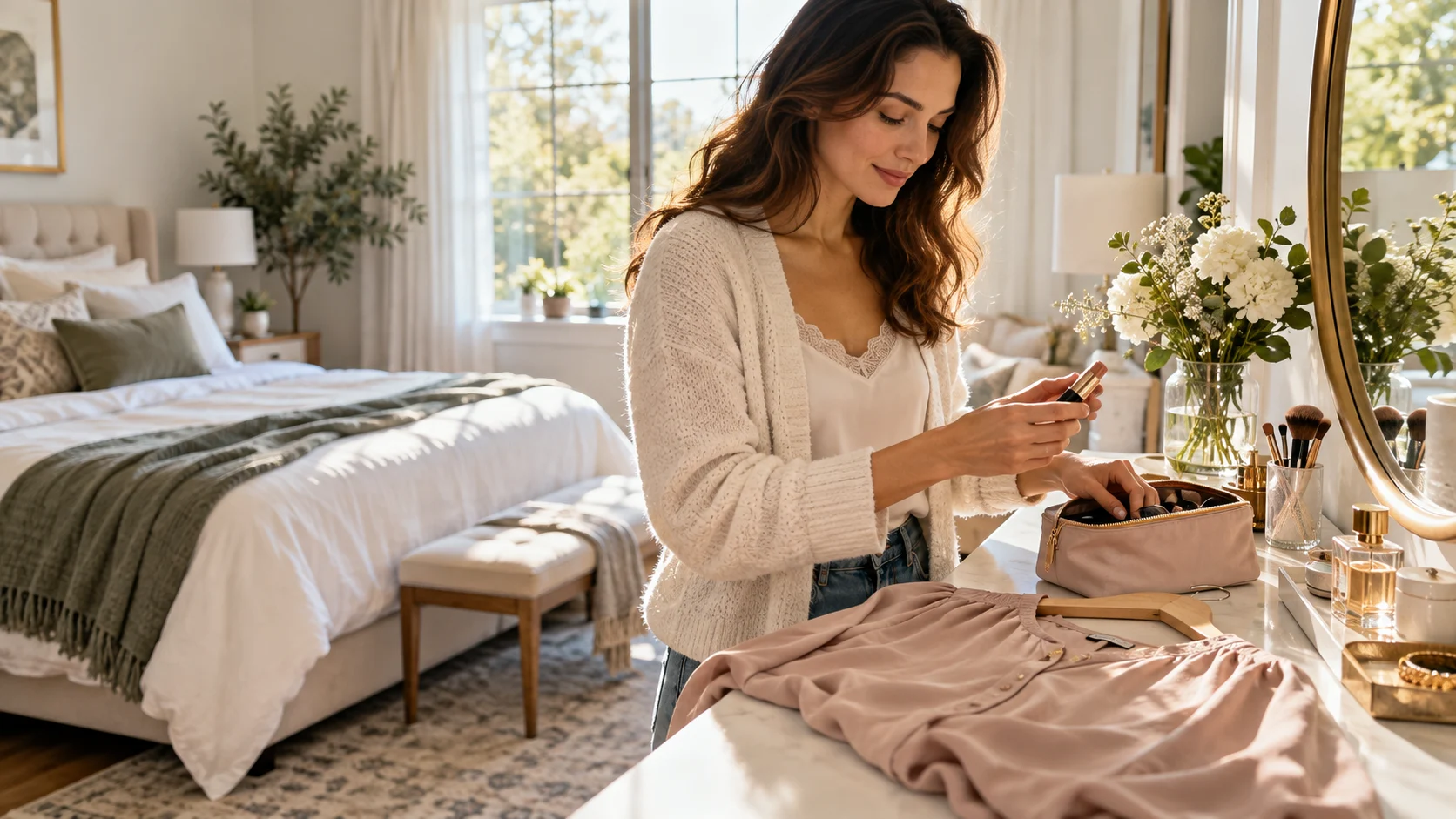
A getting ready routine works best when it reduces decisions rather than adds rules. You do not need a long sequence of perfect habits before leaving home. A dependable outfit, a manageable beauty kit and a realistic order of tasks can make an ordinary morning feel less rushed.
The useful starting point is your actual schedule. Notice where time disappears: searching for clothes, changing an outfit repeatedly, finding a missing brush or trying an unfamiliar makeup technique. This guide helps you build a routine around those practical problems, with room for different days instead of one rigid version.
Observe a normal morning before changing it
Choose an ordinary day and note what you do between waking and leaving. You do not need precise tracking for every minute. Write down the moments when you pause, search for something or repeat a task because the first attempt did not work.
Look for patterns rather than blaming yourself for being disorganised. A missing item may need a better place to live. An outfit that takes several tries may need a saved combination. A routine becomes easier when the environment supports it, not when every step depends on extra willpower.
Decide what is essential for leaving comfortably
Separate the things you genuinely need from optional additions. Dressing appropriately, following your care needs and carrying required items belong in the essential group. An elaborate eye look or trying a new hairstyle may be enjoyable without being necessary every morning.
Keep prescribed treatments or other professional advice outside ordinary routine cuts. Follow the instructions you have been given. The aim is to simplify optional decisions, not to remove important care because it takes more time than a beauty trend suggests.
Prepare one dependable outfit in advance
Choose an outfit that suits the next day’s weather and plans, then check the shoes and outer layer. Put the pieces where you can reach them. This is more useful than selecting only a top and leaving the rest of the combination unresolved.
Our wardrobe reset guide explains how to build and save practical combinations. Keep two or three reliable alternatives available so a change in weather does not force you to restart the whole decision in the morning.
Keep the beauty kit visible and limited
Place the products you use daily together and move occasional items elsewhere. You should be able to identify the next step without comparing several similar products. A smaller visible area can help even if you enjoy a larger collection as a hobby.
Our beauty capsule routine provides a way to organise by function. Keep care and makeup understandable rather than turning every product on the shelf into a compulsory step. Optional colour can stay available without slowing the ordinary routine.
Build a simple makeup version first
Choose the look you can comfortably repeat with familiar products and clean tools. It may involve concealer, a little cheek colour and a lip product, or another combination that suits you. There is no requirement to use a full base or several eye shades.
Our natural makeup tutorial offers a starting point. Once the simple version is dependable, create an expanded version for days when you have more time. You will then know what can be added without rebuilding the entire process.
Give hair a realistic plan
Decide whether the morning calls for styling, a simple arrangement or using the shape already in your hair. Keep suitable accessories where you can find them. A clip you know how to use is more practical than an elaborate method you only watched once.
If you want to learn a new technique, practise when you are not about to leave. Our heatless waves guide explains how to test a method and adjust it gradually. A busy morning should use the version you understand, not become the first trial.
Put tasks in a useful order
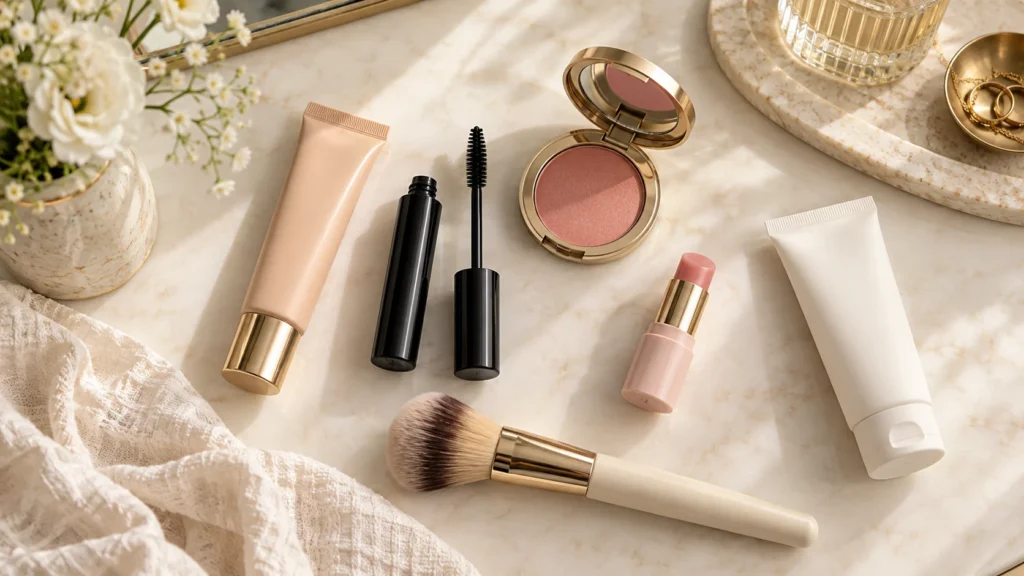
Some steps are easier when done before dressing, while others make sense afterwards. Choose an order that suits your products, clothes and available space. Avoid copying a routine that requires facilities or time you do not have.
Consider where waiting naturally fits. If a product needs time according to its instructions, use that interval for another task instead of rushing the next layer. Keep the order simple enough to remember without an elaborate chart. The purpose is a smoother morning, not another item to manage.
Create a shorter version for rushed days
A routine needs a fallback. Decide which optional steps can be reduced and which essentials stay. That might mean a simpler lip, no detailed eye look and an outfit you already photographed. Planning the shorter version makes it easier to use without feeling that the morning has failed.
Keep the fallback genuinely manageable. If it still asks for several unfamiliar techniques, it is not a useful alternative. Try it once on a normal day so you know how it feels and whether any necessary item is missing.
Put leaving essentials in one place
Choose a consistent place for the bag, keys and other items you need. Pack what can be prepared in advance. This prevents the final few minutes from becoming a search through rooms after the clothes and makeup are already finished.
Check the next day’s specific requirements, not only the usual items. A work document, appointment information or weather appropriate accessory can easily be forgotten if the routine relies entirely on memory. A short list near the bag can help without creating a complicated system.
Keep maintenance separate from the morning
Brush cleaning, garment repairs and sorting old products are useful tasks, but they do not need to happen while you are trying to leave. Set aside another time for them so the everyday routine uses clean, ready items.
Our brush care guide can help you plan tool maintenance. A clean tool available in the morning reduces the temptation to improvise with something unsuitable or add a new purchase because the existing item was never prepared.
Review what worked after a week
Notice which changes genuinely helped. You may find that preparing shoes mattered more than laying out makeup, or that moving one product saved repeated searching. Keep those improvements and remove steps that created work without a clear benefit.
Do not judge the routine by whether every morning looks identical. Plans change and some days remain rushed. A good routine gives you dependable options and makes recovery easier, rather than demanding perfect performance before you can begin the day.
Getting ready routine checklist
- Prepare a complete outfit, including shoes.
- Keep daily beauty products together.
- Use a familiar makeup and hair version.
- Plan a shorter routine for rushed days.
- Put leaving essentials in one place.
- Maintain tools and clothes at another time.
You can build the system gradually. Solve the most repeated problem first and observe the difference before adding another habit. A useful routine is often a few small changes that fit your life, not a long list borrowed from someone else’s morning.
Frequently asked questions
How early should I start getting ready?
Base it on your own tasks and travel needs. Observe the routine, allow room for ordinary interruptions and adjust from there. A universal time estimate is less useful than knowing which steps you actually repeat and how long your departure process usually takes.
What if I enjoy spending longer on beauty?
Keep an extended version for days when you want it. Enjoyment is a valid reason to use more time, as long as the routine fits your plans. The shorter version is an option for busy days, not a rule that every morning must be minimal.