Sunscreen under makeup can be straightforward when you choose a suitable product and keep the layers manageable. The frustrating part is often the finish: makeup may roll, slide or look patchy when several textures are applied quickly. Solving that problem should not mean reducing sunscreen to a tiny amount just to make foundation behave.
This guide separates sun protection from cosmetic finishing. First, choose and use sunscreen according to its label. Then simplify the makeup around it and test the combination on an ordinary day. The goal is a comfortable routine you can repeat, with a realistic plan for outdoor time rather than a perfect photograph.
Read the sunscreen label before considering makeup
The American Academy of Dermatology’s sunscreen label guide recommends broad spectrum protection, SPF 30 or higher and water resistance. These details matter more than whether a product is marketed as a makeup primer or has attractive packaging.
Check the instructions for application, reapplication and storage. Do not assume that a higher SPF means the product can stay on indefinitely. Shade and sun protective clothing also belong in your plan. Makeup is an optional finish around sun protection, rather than the measure of whether the sunscreen is doing its job.
Do not treat foundation SPF as a complete routine
A makeup product with an SPF label may sound convenient, but its labelled protection depends on appropriate use. The amount applied for cosmetic coverage may not be the amount needed for that protection. Avoid assuming that a few small dots of foundation replace your sunscreen routine.
It is usually easier to keep the decisions separate: use a suitable sunscreen as instructed, then choose makeup for the appearance you want. If you are considering a combined product, read its protection instructions carefully rather than treating every SPF claim as equivalent.
Begin with a simple set of layers
When testing a new combination, use only the products you need. Extra serums, several moisturizers and multiple primers make it difficult to identify why the makeup becomes patchy. Keep any prescribed products in place as advised, and review optional cosmetic steps first.
Write down the order and the products you used. If a problem appears, change one optional element at a time. This is more useful than buying a new primer after every unsuccessful morning. Our skinimalism routine guide explains how to make each step easier to understand.
Follow application guidance rather than rushing
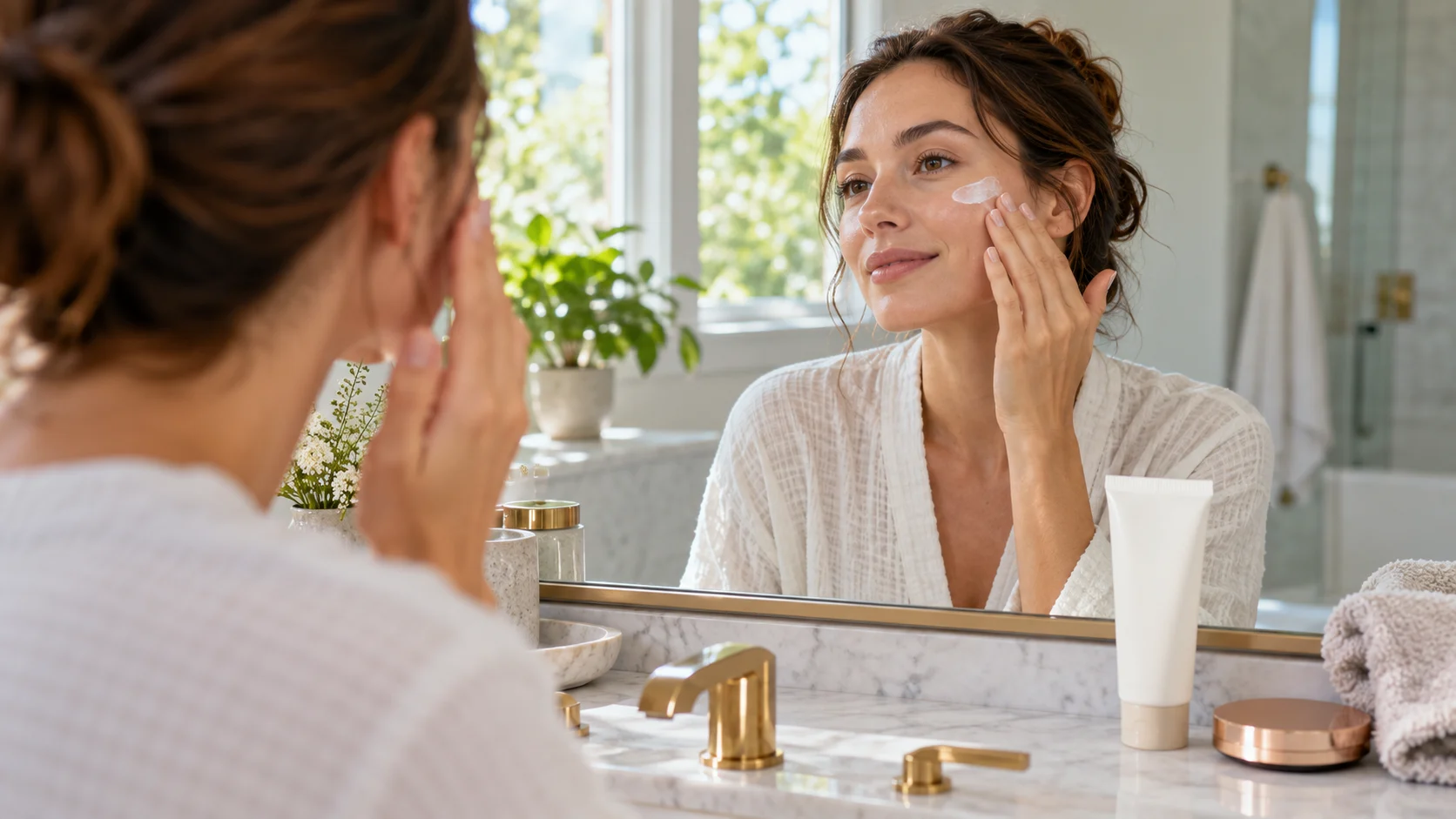
Use the sunscreen as directed and give the routine enough time before applying makeup. The AAD’s application guidance recommends applying before outdoor exposure and using enough for uncovered skin. Read the product’s specific instructions as well.
Do not mix foundation into sunscreen to create a custom tint unless the manufacturer explicitly instructs that use. Mixing makes it harder to know whether you are applying the sunscreen as intended. Apply your cosmetic colour separately so the purpose and amount of each step remain clear.
Adjust the makeup technique
Start with a small amount of makeup and build only where you want coverage. Heavy rubbing can disturb layers and make the finish uneven. Try gentle application with a clean tool suited to the formula, then check whether the base needs more product at all.
A full face of foundation is optional. Concealer in selected areas may create the finish you prefer while leaving fewer layers to manage. Our natural makeup guide provides a simple routine you can adapt around your chosen sunscreen.
Troubleshoot pilling without removing protection
If product rolls into small particles, review the optional layers and application technique. Check whether you are applying several rich textures or working the makeup repeatedly over the same area. Test a simpler combination before deciding that sunscreen and makeup cannot work together.
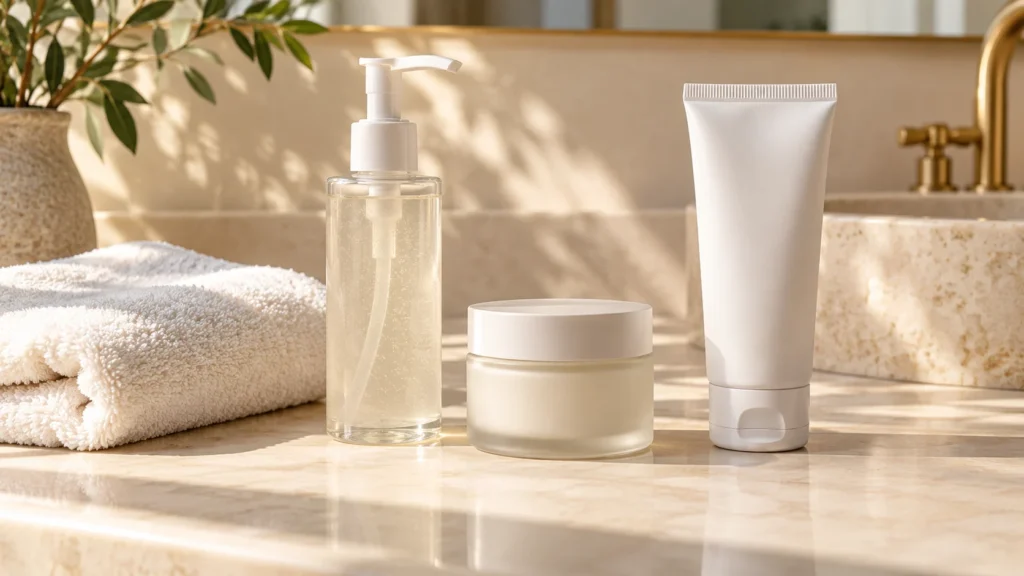
Do not solve the problem by using less sunscreen than instructed or wiping most of it away. If the finish remains impractical, look for another suitable sunscreen texture and test it carefully. A product you can wear comfortably is more useful than one you avoid because every morning becomes a struggle.
Check the finish in ordinary conditions
Look at the base in daylight and after a normal period of wear. A bathroom mirror can hide colour mismatch or texture, while a ring light may make the result look different from daily life. Assess comfort, appearance and practicality rather than expecting the skin to look filtered.
Keep notes on what actually changes. Does the foundation separate around the nose, become shiny or feel heavy? Specific observations help you adjust the cosmetic part of the routine. A vague conclusion that the sunscreen is bad makes the next purchase harder to evaluate.
Plan reapplication before leaving home
The AAD advises reapplication when outdoors, generally every two hours and after activities such as swimming or sweating, with label guidance for water resistance. Think about how your day will work before applying elaborate makeup that you are unwilling to adjust.
A practical plan may involve simpler makeup, a place to wash your hands and access to your sunscreen. Do not assume a light dusting of an SPF powder automatically gives the same protection as properly applied sunscreen. Read the product’s directions and consider whether you can realistically follow them.
Keep shade and clothing in the routine
A hat, suitable clothing and shade reduce the pressure to treat one cosmetic layer as your entire plan. Choose these according to the weather and the outdoor activity. A brief commute, a long walk and a day near water create different practical demands.
Put the items you need beside your bag rather than remembering them after leaving home. A routine works better when the sunscreen, hat or sunglasses are accessible. Organisation may seem less interesting than product shopping, but it often makes the useful steps easier to repeat.
Sunscreen under makeup checklist
- Read the label and use sunscreen as instructed.
- Keep optional skincare and makeup layers manageable.
- Apply makeup gently with clean tools.
- Check the finish in normal light.
- Plan outdoor reapplication.
- Include shade and protective clothing.
If a sunscreen causes irritation, stop using that product and seek advice about a suitable alternative. Do not tolerate pain because a formula is popular. The aim is a sun protection routine that suits you, not loyalty to one texture or brand.
Frequently asked questions
Can I wear a tinted sunscreen instead of foundation?
You can choose a tinted product for its appearance if it provides the protection you need and you use it correctly. Check the shade and finish in daylight. It may simplify the cosmetic routine, but the application and reapplication instructions still matter.
Do I need primer over sunscreen?
Not automatically. Try your chosen makeup without an extra primer first. If the combination works comfortably, another layer may be unnecessary. If you do add one, test it as a separate change so you can judge whether it improves the finish.
What if reapplying ruins my makeup?
That is a practical reason to simplify the look on days with substantial outdoor time. Sun protection should not depend on keeping a cosmetic finish untouched. Plan a routine you can maintain, and ask a dermatologist if you need advice for a particular skin concern.