Category: Skincare

Explore skincare routines and guides to cleansing, hydration and everyday care. Learn how to approach a simple routine and find ideas to discuss with a qualified professional when needed.

  • Best Lip Balm for Chapped Lips: A Gentle Care Guide

    Best Lip Balm for Chapped Lips: A Gentle Care Guide

    Finding the best lip balm for chapped lips starts with comfort, not a fashionable flavour or an expensive label. When your lips feel tight, rough, or flaky, a simple formula is often a more useful starting point than a complicated lip treatment. The aim is to choose something you can apply consistently and tolerate comfortably.

    This guide compares practical options, explains how to read a label, and helps you build a manageable lip care routine. The recommendations are based on published ingredient information and dermatology guidance, rather than hands-on product testing. There is no single balm that suits every person, and a product should never earn a place in your routine simply because it is trending.
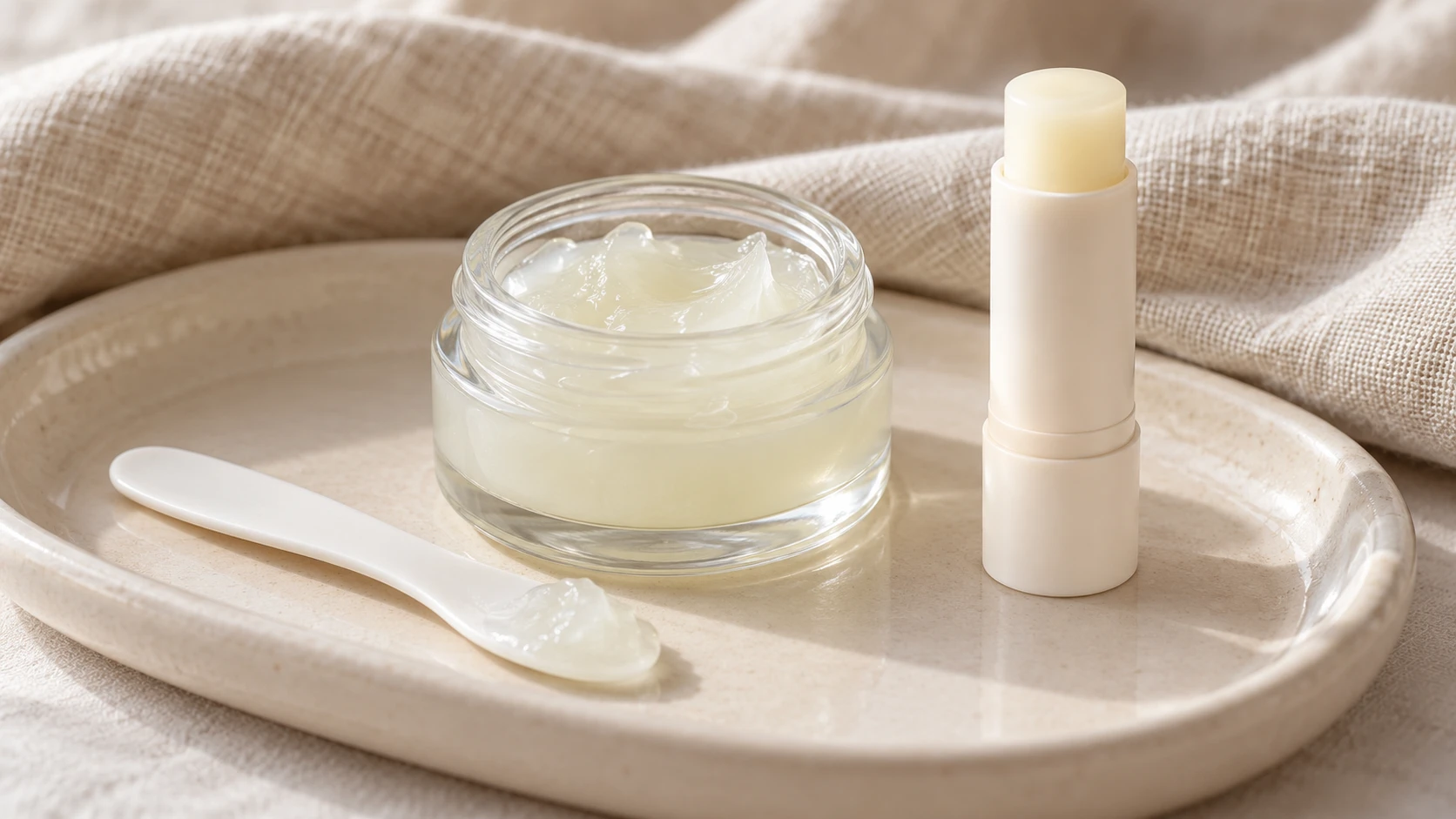
    Petroleum jelly jar, cosmetic spatula and lip balm on a cream ceramic tray

    What Makes a Good Lip Balm?

    For very dry lips, start by considering a plain, fragrance-free ointment. The American Academy of Dermatology recommends non-irritating products and identifies white petroleum jelly as an option for very dry, cracked lips. Its dermatologists’ chapped-lip guidance also stresses that burning or stinging is a reason to stop using a product.

    That makes comfort an essential selection criterion. A cooling sensation, delicious scent, glossy finish, or elaborate package does not tell you whether a formula will agree with your lips. Think about the texture you enjoy, the ingredients you tolerate, and the circumstances in which you will actually use it.

    A jar can feel convenient on a bedside table, while a small tube may fit better in a work bag. Neither format automatically performs better. The best choice is one that combines a suitable formula with packaging that makes regular application straightforward.

    Three Practical Options to Consider

    Vaseline Original Healing Jelly: A Simple Starting Point

    Vaseline Original Healing Jelly is a straightforward petroleum jelly option. The brand lists petrolatum as its ingredient. For someone wanting a minimal formula rather than fragrance, colour, or a long list of cosmetic extras, that simplicity can be appealing.

    Its thick, shiny texture is the main practical tradeoff. You may enjoy it for evening use but prefer a less noticeable finish during meetings or beneath lipstick. Buy the Original version deliberately: products with similar packaging or different flavours are not necessarily the same formula.

    Choose a size that fits your habits. A larger jar might make sense at home, while a compact container can be easier to carry. Compare the exact product name and ingredient list, rather than assuming every item from the brand offers an identical experience.

    CeraVe Healing Ointment: An Ingredient-Rich Alternative

    CeraVe Healing Ointment combines petrolatum with ceramides and hyaluronic acid. The manufacturer describes the formula as fragrance-free and lanolin-free. It is worth considering if you want a petrolatum-based ointment with additional ingredients and prefer the available tube packaging.

    This is an ointment, so expect a different application experience from a firm waxy stick. Begin with a small amount and decide whether you like the finish. More ingredients do not automatically make it the best lip balm for chapped lips; suitability still depends on personal tolerance and preference.

    Check the label sold in your country before buying. Packaging, sizes, and formulas can change. Do not substitute another CeraVe product just because its name includes moisturising or healing; identify the exact item you intend to use and follow its directions.

    A Fragrance-Free Stick: A Convenient Everyday Format

    A plain stick balm can be a practical choice when portability matters most. Rather than choosing a specific brand by popularity alone, compare fragrance-free options and their complete ingredient lists. This approach is especially useful when the products available locally differ from those mentioned in international reviews.

    Look at the mechanism as well as the formula. Does the cap close securely? Can you apply the stick neatly? Is the product easy to find again? These ordinary details can determine whether a balm becomes a dependable everyday item or stays forgotten in a drawer.

    An outdoor balm should be chosen separately for labelled sun protection. The AAD recommends a non-irritating lip product with SPF 30 or higher and reapplication every two hours outdoors. A regular ointment without an SPF label is not a substitute for that protection.
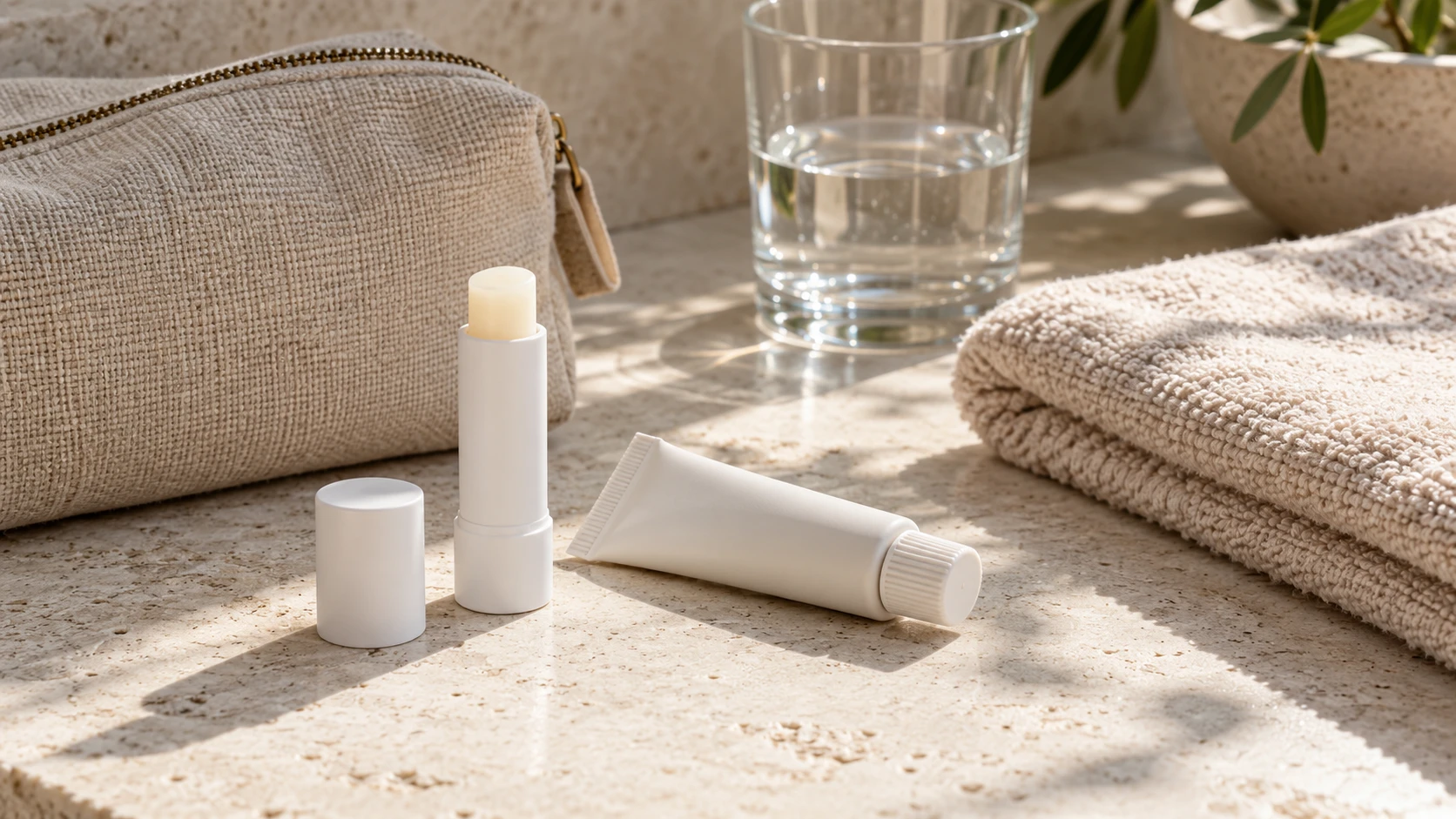
    Lip balm and ointment beside a travel pouch

    How to Read the Label Without Overcomplicating It

    Start with three questions: what is the exact product, what does the ingredient list contain, and what do the directions say? Marketing phrases such as nourishing, intensive, natural, or luxury are less useful than clear answers to those questions.

    If you already know an ingredient irritates you, check for it before purchasing. While your lips are chapped, the AAD advises avoiding potential irritants such as fragrance, menthol, camphor, and certain flavourings. A product that feels uncomfortable does not need to be finished just to justify its price.

    Keep a photograph of the packaging when you find something suitable. It can help you repurchase the same version and notice a reformulation. If you are comparing two products, write down what you actually care about: texture, scent, packaging, size, and availability.

    For a broader approach to choosing comfortable textures, explore our moisturizer guide. Lip care can be approached with the same practical mindset: choose thoughtfully, keep the routine manageable, and avoid buying several near-identical products without a clear purpose.
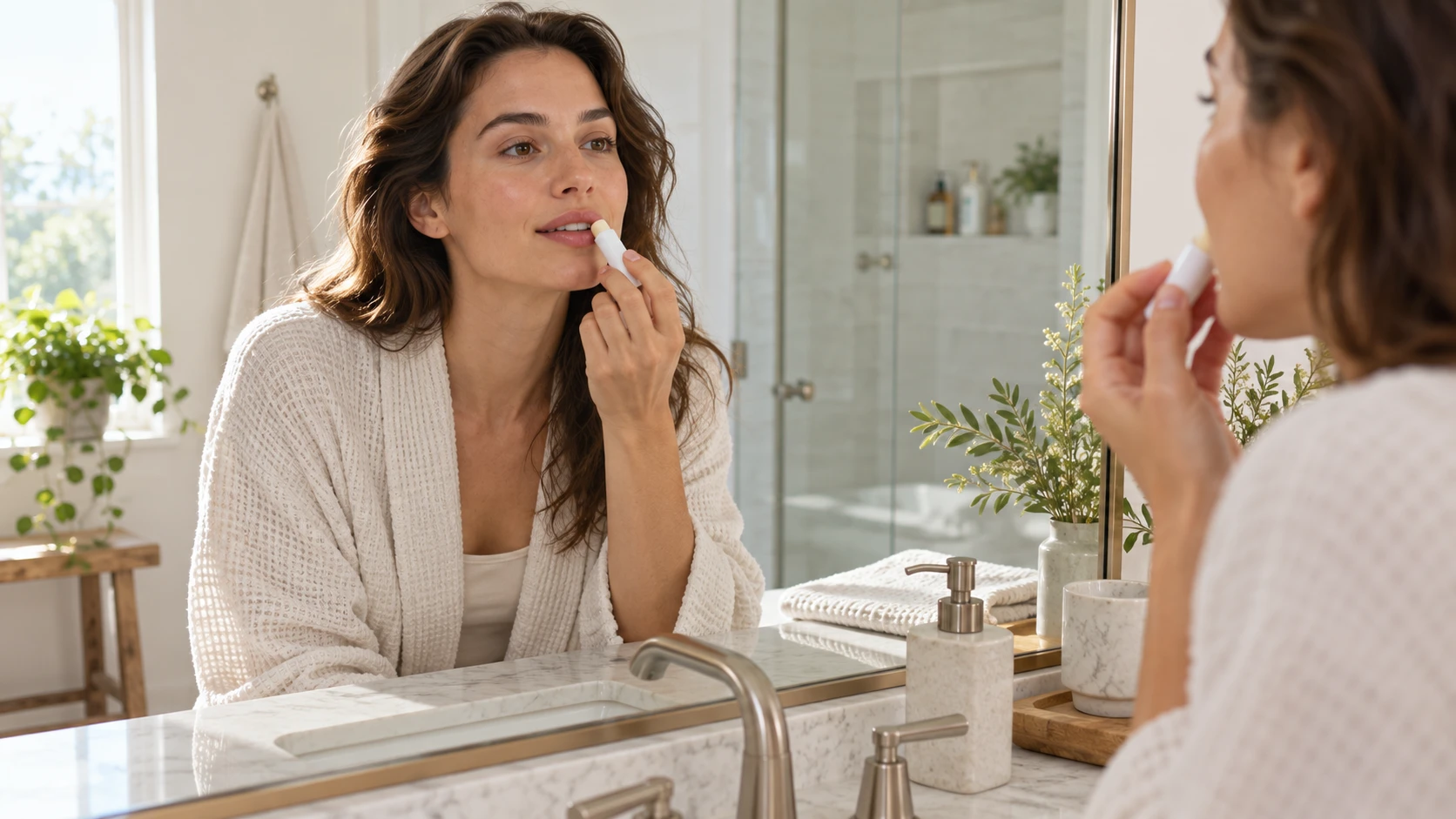
    Woman applying lip balm in a morning routine

    Build a Lip Care Routine You Can Repeat

    Keep your chosen balm somewhere visible and attach application to an existing habit, such as finishing your morning skincare. A second convenient location, like a bedside table, may help you remember evening use. The point is consistency rather than collecting products for every possible occasion.

    Use clean hands when applying a jar product, and avoid sharing your balm. The NHS includes these precautions in its advice for sore or dry lips. It also advises against picking, biting, or repeatedly licking dry lips, which can worsen soreness or slow healing.

    Keep facial products away from your lips when their instructions do not recommend lip application. Give yourself a clear place in the routine for balm instead of treating it as an afterthought. Our beginner skincare routine offers a useful framework for organising the rest of your daily care.

    If makeup is important to you, consider when you prefer to apply a richer ointment and when a lighter finish feels more convenient. You do not need identical textures for every setting. However, buying a daytime option and an evening option should solve a practical problem, not simply expand a collection.

    Shop Carefully and Set Realistic Expectations

    Compare the price per amount alongside packaging and how frequently you expect to use the product. A low purchase price is not automatically better value if you dislike the texture or repeatedly lose a poorly fitting container. Equally, expensive packaging is not evidence of superior care.

    Choose reputable sellers and inspect seals, labels, and expiry information where provided. Avoid assuming that a social media favourite will perform identically for you. Published product descriptions explain intended features; they do not replace your own experience of comfort.

    Before ordering, decide where the balm will live. A pocket product needs a secure cap and a manageable size; a bathroom product may benefit from packaging you can identify easily among other skincare items. Keep a small note about why you chose it and whether those expectations were met. This makes your next purchase more deliberate. You might discover that convenience matters more to you than shine, or that a familiar texture matters more than an unusual ingredient. Those observations are useful shopping information, even when they differ from a reviewer’s preferences or the presentation in an attractive advertising campaign online.

    Seek medical advice if your lips are hot, painful, and swollen. If persistent chapping does not improve with gentle care, a pharmacist or clinician can help you assess it. Do not keep adding stronger treatments or supplements based on guesses about the cause.

    Frequently Asked Questions

    What Is the Best Lip Balm for Chapped Lips?

    A plain, fragrance-free petroleum jelly is a reasonable starting option for very dry lips. The best individual choice also depends on tolerance, texture preference, and whether you need labelled SPF protection outdoors.

    Is an Ointment Better Than a Stick?

    An ointment offers a richer application experience, while a stick can be easier to carry. Choose based on the formula and your routine rather than assuming one packaging style suits everyone.

    Should Lip Balm Tingle?

    Tingling is not proof that a product is helping. If a balm burns, stings, or feels uncomfortable, stop using it and consider a gentler alternative.

    Can I Use the Same Balm Day and Night?

    Yes, if it suits you. For outdoor use, select a suitable SPF-labelled lip product as well; ordinary petroleum jelly does not provide labelled sun protection.

    Do I Need Several Lip Products?

    No. Start with one comfortable option and add another only for a clear reason, such as outdoor SPF or a packaging format that works better away from home.

    When Should I Ask for Help?

    Ask a pharmacist or clinician about ongoing soreness, repeated reactions, or concerning symptoms. Persistent problems deserve assessment rather than an endless cycle of buying increasingly complicated lip treatments.
  • Skinimalism Routine: Fewer Products, Clearer Decisions

    Skinimalism Routine: Fewer Products, Clearer Decisions

    A skinimalism routine means using a considered set of skincare products instead of adding a new step whenever something becomes popular. The goal is not the smallest possible shelf or a promise of perfect skin. It is a routine you understand, can maintain and can adjust without changing everything at once.

    The idea fits the wider interest in manageable beauty routines, but the basics are more important than the label. Start by separating essential daily care from optional experiments. Then make decisions based on your needs, product instructions and how your skin responds, rather than the number of products in an influencer’s routine.

    Know what each product is doing

    Write a short list of everything you apply and the reason you use it. If you cannot explain a product’s role, that is a useful prompt to investigate before repurchasing. Two products may serve similar purposes, while another may have been added for a concern you no longer have.

    Do not include prescribed treatments in an ordinary decluttering exercise. Follow your clinician’s instructions and ask before changing them. Skinimalism is an organisation approach, not a reason to interrupt treatment or assume that every active ingredient is unnecessary.

    Give the basic routine a clear place

    The American Academy of Dermatology’s budget skincare guidance describes a straightforward framework of cleansing, moisturising and sun protection. Those roles are a useful starting point when a routine has become difficult to understand or too expensive to maintain.

    Keep the products you already tolerate while reviewing optional additions. You do not need to buy a matching range or use one brand for every step. A routine is coherent when the products have clear functions, not when the packaging looks identical.

    Review the morning and evening separately

    A morning routine has different practical demands from an evening routine. In the morning, you may need products that sit comfortably beneath makeup and fit a short schedule. At night, you have time to remove makeup and follow the care instructions for your chosen products.

    Write down both routines in the order you actually use them. Notice whether extra steps appear only because the products are sitting beside the sink. Move optional items into a separate area so the daily routine remains easy to see without making every product compulsory.

    Introduce one change at a time

    When several products are introduced together, it becomes harder to identify which one caused a problem or provided a useful effect. Choose a specific reason for the change and follow the product instructions. Keep the rest of the routine stable while you assess it.

    The AAD provides guidance on testing new skincare products, including checking a small area before wider use. That is not a guarantee against every reaction, but it is more considered than putting several unfamiliar products on your face together.

    Keep a short routine record

    A few notes can help when you are deciding whether a product belongs in the routine. Record when you began using it, what you expected and any changes you noticed. Include practical details such as whether the packaging leaks or whether the texture makes you avoid the step.

    Avoid checking your face repeatedly throughout the day for tiny differences. Look for meaningful patterns rather than judging the routine from one photograph or one difficult morning. Lighting, makeup and temporary changes can affect what you see. A simple record is useful without becoming a constant inspection.

    Separate comfort from marketing language

    Words such as luxury, advanced or glow do not tell you whether a product suits your routine. Look at the purpose, instructions and the concerns it is meant for. If you have sensitive skin or a known allergy, ingredient information matters more than attractive descriptions.

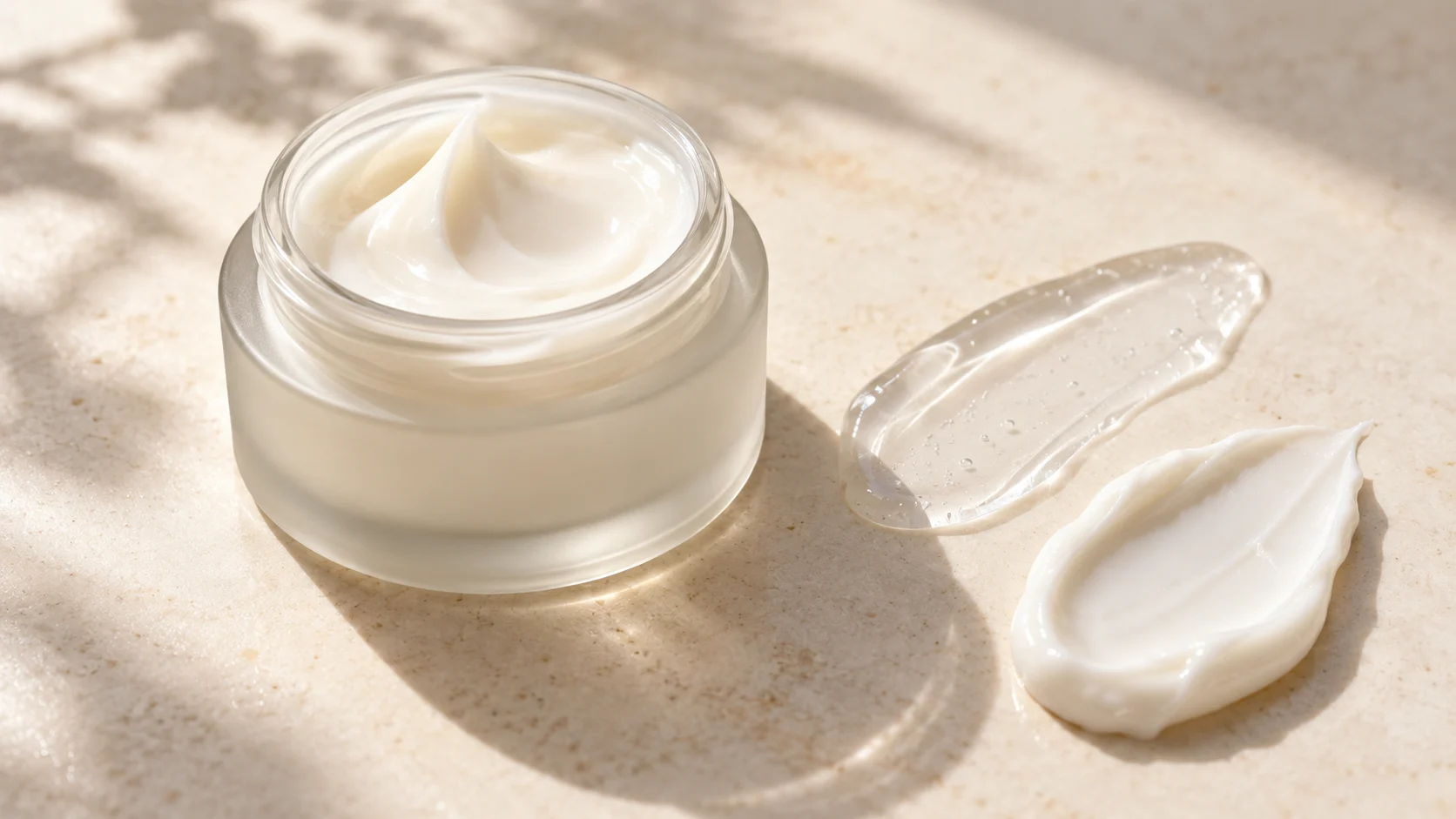
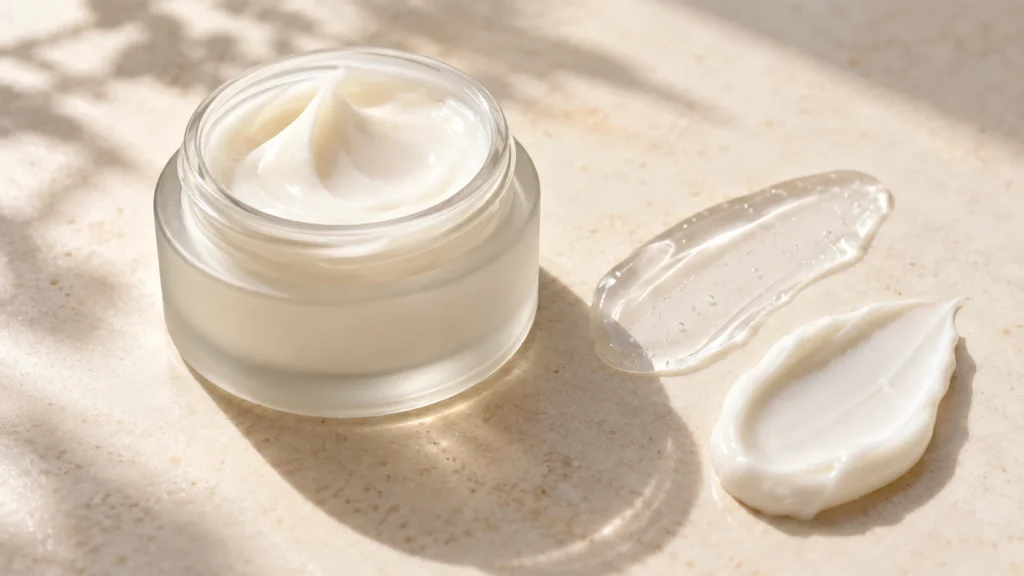
    Elegant close-up product texture photograph of an open unbranded moisturizer jar with cream, a light gel moisturizer swatch and a rich cream swatch on an ivory surface.

    Do not assume that natural ingredients are automatically suitable or that a longer ingredient list means a product is poor. Those shortcuts can make decisions less accurate. If you are unsure about a particular ingredient or persistent irritation, a dermatologist can help you assess the actual issue.

    Make the routine easy to use

    Keep daily products where you can reach them without digging through a drawer. Store them as instructed, away from conditions that could damage them. If a product is difficult to dispense, transfer decisions should follow manufacturer guidance rather than an improvised container with no label.

    A small tray can separate daily care from occasional products, but elaborate storage is optional. The point is visibility and convenience. You should be able to identify the next step without comparing several similar bottles while rushing to leave home.

    Work out a realistic replacement budget

    A smaller routine may reduce spending, but only if you avoid replacing the removed steps with more expensive alternatives automatically. Write down how often you use each product and whether it is a purchase you can comfortably repeat.

    Choose a dependable price range and look for a product that fulfils the needed function. Save the exact name and version of products you like so you do not accidentally buy a different formula. Packaging can look similar even when the product purpose has changed.

    Keep sun protection in the plan

    A simplified routine should still include a sensible sun protection strategy. The AAD recommends broad spectrum, water resistant sunscreen with SPF 30 or higher, alongside shade and protective clothing. Read the label and follow reapplication guidance when outdoors rather than treating morning application as permanent coverage.

    For more detail on labels, use the AAD’s sunscreen label guide. Our beginner skincare article also provides a simple overview of where care steps fit in an ordinary routine.

    Skinimalism routine checklist

    • Can you explain the purpose of each product?
    • Are you following the instructions for use and storage?
    • Have optional products become automatic steps?
    • Does the routine fit your time and budget?
    • Are you changing too many things together?
    • Is a persistent concern better assessed by a dermatologist?

    If the answer to the final question is yes, adding more products may only complicate the situation. Persistent pain, irritation or a changing skin problem deserves appropriate assessment. A beauty trend is not a diagnosis, and a shorter routine does not solve every concern.

    Frequently asked questions

    Does skinimalism mean avoiding every serum?

    No. An optional product can belong in a simple routine when it has a clear purpose and is suitable for you. The useful question is whether it adds value, not whether its category sounds too elaborate. Follow instructions and avoid stacking unfamiliar products just to increase the number of steps.

    Can I simplify my routine while wearing makeup daily?

    Yes. Organise makeup separately from care so the two collections do not become one long list of compulsory steps. Our beauty capsule guide can help you identify the makeup you repeat while leaving skincare decisions based on your own needs.

    How do I know when the routine needs another review?

    Review it when your schedule, budget or needs change, or when a product is no longer comfortable to use. You do not need to rebuild it every season simply because new launches appear. Keep what works and make specific changes with a clear reason.

  • Moisturizer Guide: Choose a Texture That Fits Your Routine

    Moisturizer Guide: Choose a Texture That Fits Your Routine

    This moisturizer guide starts with a simple question: will you comfortably use the product you choose? A formula can sound impressive yet feel too heavy beneath makeup, too light for your needs or inconvenient to apply. The best purchase for your routine is one whose purpose, texture and instructions make sense to you.

    You do not have to become an ingredient expert before buying ordinary skincare. Begin with your skin’s needs, any known sensitivities and the conditions in which you use the product. This guide explains how to compare options thoughtfully without assuming that price, packaging or one popular ingredient tells the whole story.

    Describe the problem you want to solve

    Write down what makes your current moisturizer inconvenient or unsuitable. You might dislike the finish beneath foundation, find the packaging difficult or need a product you can carry without leaks. These are clearer buying criteria than simply wanting something that promises a glow.

    If the problem is persistent stinging, a rash or a diagnosed skin condition, speak with a dermatologist rather than treating it as a texture preference. A different jar may not address the underlying issue. Ordinary product comparison is useful for routine choices, but it should not replace assessment of symptoms.

    Think about morning and evening use

    A product used before makeup may need to settle comfortably within your available time. An evening product can feel different if you enjoy a richer texture. You can use the same suitable moisturizer for both, but there is no reason to force identical choices if your practical needs differ.

    Try your existing product with the rest of the routine before replacing it. Sometimes using too much product or rushing straight into makeup causes the frustrating finish. Follow instructions, use a sensible amount and assess the complete combination rather than judging one product in isolation.

    Compare textures without assuming one is superior

    Gels, lotions, creams and ointments can feel different, but the category alone does not guarantee suitability. A lighter texture may be comfortable for one person and insufficient for another. A richer texture may suit evening use but feel inconvenient beneath a particular makeup base.

    The American Academy of Dermatology’s moisturizer guidance discusses selecting products for your skin’s needs. Use the guidance as a reference, then consider the actual product instructions rather than relying on a broad label such as lightweight.

    Read the label before the advertising

    Look at the intended use, ingredients, warnings and storage instructions. If you know that a particular ingredient causes a reaction, check every new formula rather than assuming products within a familiar brand will be the same. Names and packaging can remain similar while formulas differ.

    For skin that reacts to fragrance, the AAD distinguishes fragrance free products from the broader idea of an unscented product. Its product testing guidance is useful when considering a new option. A pleasant smell is not evidence that a formula will be comfortable.

    Test a new product thoughtfully

    Follow the product’s instructions and the AAD guidance on checking a small area before wider use. Avoid introducing several unfamiliar products at the same time. If a reaction occurs, stop the product and seek appropriate advice rather than continuing because the packaging calls the effect normal.

    Keep notes on practical comfort as well as appearance. Does the product leave a finish you like? Can you apply makeup over it without repeatedly correcting the base? Does the container dispense cleanly? These observations help you choose a product you will use consistently.

    Check the whole makeup combination

    A moisturizer can behave differently with different sunscreens and makeup products. If the layers roll into small particles or become patchy, simplify the combination and test it again. Do not automatically assume that the moisturizer is defective or that more primer will solve the problem.

    Use a small, controlled routine when comparing. Keep the same makeup base and application tool so you can see what changed. Our natural makeup guide offers a straightforward approach that makes it easier to assess the finish without many overlapping products.

    Keep the buying decision within your budget

    A moisturizer should be a purchase you can repeat comfortably. Expensive packaging may be enjoyable, but it is not a reason to stretch your budget for an ordinary routine step. Look for the function you need and compare the amount of product as well as the price.

    Check whether a smaller size is available if you are trying something unfamiliar. A large container can be poor value if you dislike the product and never finish it. Avoid buying several alternatives at once; that makes it harder to understand which option is worth keeping.

    Consider the packaging you will actually use

    A pump can be convenient when you want quick dispensing, while a tube may travel more easily than a heavy jar. A jar is not automatically unsuitable, but it asks for clean handling and careful storage. Choose the format according to your habits and the product instructions.

    Keep the original label and do not decant into an unmarked container for everyday storage. If you use a travel container where permitted, label it clearly and avoid mixing products. Knowing what is inside matters more than making the bathroom shelf look uniform.

    Organise moisturizer within a simple routine

    Give the product a clear place beside the other daily steps. If the shelf contains many similar jars, move occasional options elsewhere. A routine that is easy to see is easier to repeat and easier to review when something is no longer working for you.

    Our skinimalism routine guide can help you reduce unnecessary overlap. The aim is not to remove useful products; it is to make every step understandable so you are not choosing randomly between several options each morning.

    Moisturizer guide checklist

    • Identify the purpose before choosing a brand.
    • Compare the texture with your practical needs.
    • Check ingredients against known sensitivities.
    • Read use, storage and testing instructions.
    • Choose a price you can comfortably repeat.
    • Test one new option rather than several together.

    Keep a short note of the exact product you choose, including the version and size. If you later repurchase, check that you are selecting the same formula. Similar names can refer to different products, especially when a range has separate day, night or fragranced versions.

    Frequently asked questions

    Do I need different moisturizers for every season?

    Not automatically. Changes in comfort or daily conditions may justify a review, but the calendar alone does not mean your existing product has become wrong. Assess your actual needs and follow professional advice if you have a skin condition.

    Can a moisturizer replace sunscreen?

    Only use a product for sun protection when it is labelled and used appropriately for that purpose. Do not assume an ordinary moisturizer provides it. Read the sunscreen information carefully, including the amount and reapplication instructions, and keep shade and protective clothing in the wider plan.

    Should I choose a product because everyone online likes it?

    Popularity can help you discover options, but it cannot predict your experience. Use reviews to understand texture and packaging, then check the label and your own requirements. A useful routine is built around your needs rather than the most photographed jar.

  • Sunscreen Under Makeup: Build a Comfortable Morning Routine

    Sunscreen Under Makeup: Build a Comfortable Morning Routine

    Sunscreen under makeup can be straightforward when you choose a suitable product and keep the layers manageable. The frustrating part is often the finish: makeup may roll, slide or look patchy when several textures are applied quickly. Solving that problem should not mean reducing sunscreen to a tiny amount just to make foundation behave.

    This guide separates sun protection from cosmetic finishing. First, choose and use sunscreen according to its label. Then simplify the makeup around it and test the combination on an ordinary day. The goal is a comfortable routine you can repeat, with a realistic plan for outdoor time rather than a perfect photograph.

    Read the sunscreen label before considering makeup

    The American Academy of Dermatology’s sunscreen label guide recommends broad spectrum protection, SPF 30 or higher and water resistance. These details matter more than whether a product is marketed as a makeup primer or has attractive packaging.

    Check the instructions for application, reapplication and storage. Do not assume that a higher SPF means the product can stay on indefinitely. Shade and sun protective clothing also belong in your plan. Makeup is an optional finish around sun protection, rather than the measure of whether the sunscreen is doing its job.

    Do not treat foundation SPF as a complete routine

    A makeup product with an SPF label may sound convenient, but its labelled protection depends on appropriate use. The amount applied for cosmetic coverage may not be the amount needed for that protection. Avoid assuming that a few small dots of foundation replace your sunscreen routine.

    It is usually easier to keep the decisions separate: use a suitable sunscreen as instructed, then choose makeup for the appearance you want. If you are considering a combined product, read its protection instructions carefully rather than treating every SPF claim as equivalent.

    Begin with a simple set of layers

    When testing a new combination, use only the products you need. Extra serums, several moisturizers and multiple primers make it difficult to identify why the makeup becomes patchy. Keep any prescribed products in place as advised, and review optional cosmetic steps first.

    Write down the order and the products you used. If a problem appears, change one optional element at a time. This is more useful than buying a new primer after every unsuccessful morning. Our skinimalism routine guide explains how to make each step easier to understand.

    Follow application guidance rather than rushing

    Use the sunscreen as directed and give the routine enough time before applying makeup. The AAD’s application guidance recommends applying before outdoor exposure and using enough for uncovered skin. Read the product’s specific instructions as well.

    Do not mix foundation into sunscreen to create a custom tint unless the manufacturer explicitly instructs that use. Mixing makes it harder to know whether you are applying the sunscreen as intended. Apply your cosmetic colour separately so the purpose and amount of each step remain clear.

    Adjust the makeup technique

    Start with a small amount of makeup and build only where you want coverage. Heavy rubbing can disturb layers and make the finish uneven. Try gentle application with a clean tool suited to the formula, then check whether the base needs more product at all.

    A full face of foundation is optional. Concealer in selected areas may create the finish you prefer while leaving fewer layers to manage. Our natural makeup guide provides a simple routine you can adapt around your chosen sunscreen.

    Troubleshoot pilling without removing protection

    If product rolls into small particles, review the optional layers and application technique. Check whether you are applying several rich textures or working the makeup repeatedly over the same area. Test a simpler combination before deciding that sunscreen and makeup cannot work together.

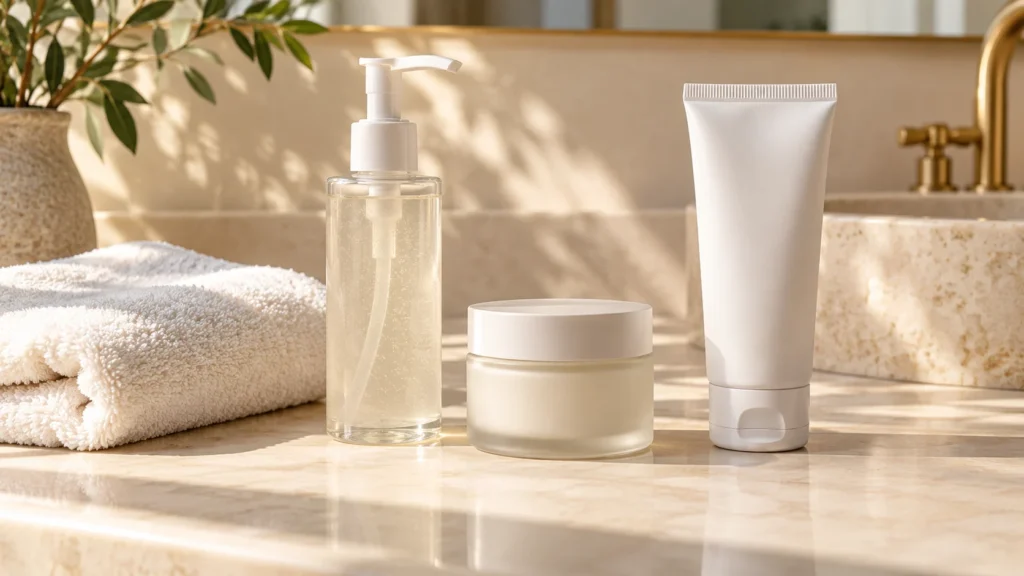
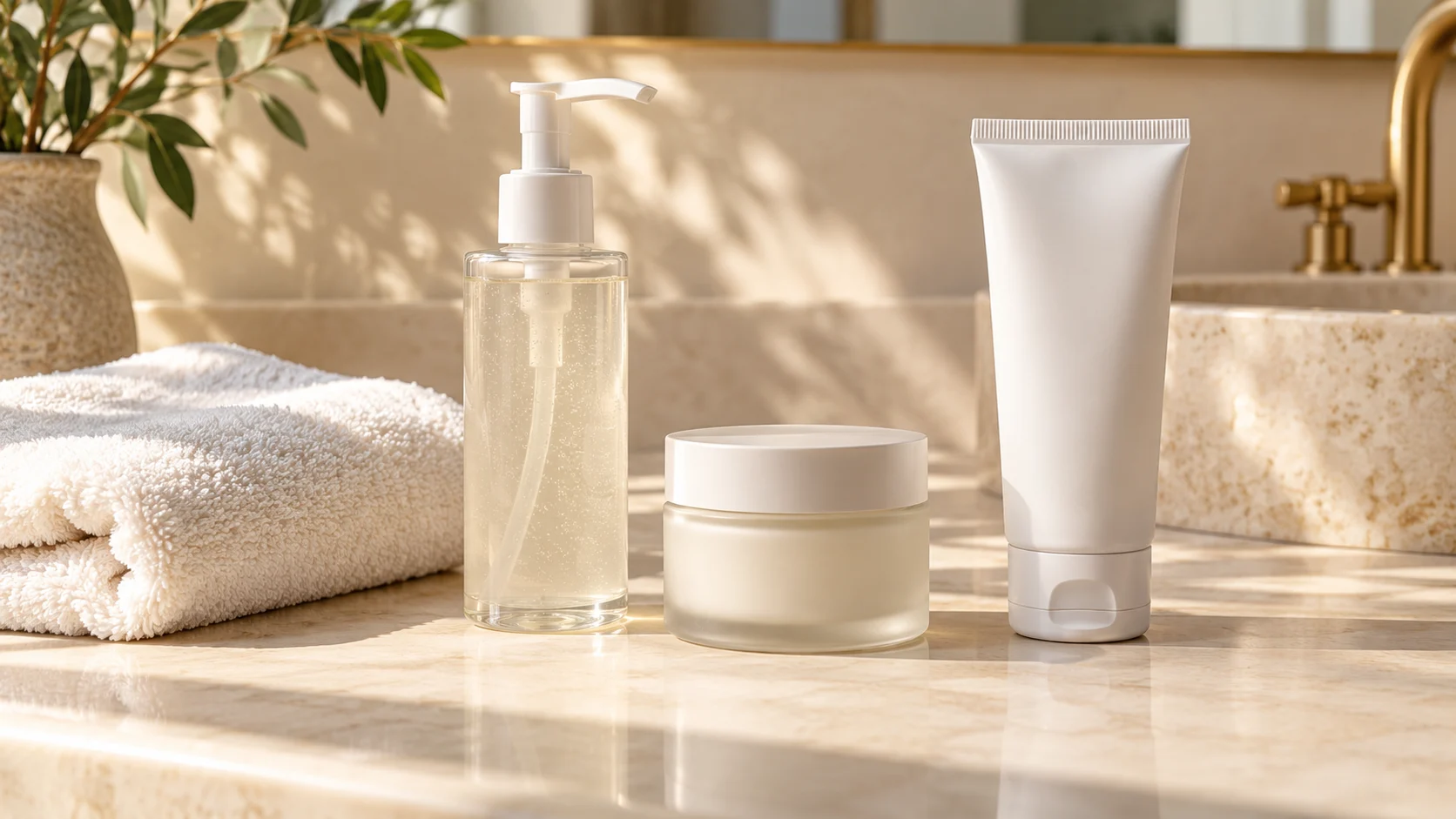
    Minimal skincare flat lay: only three unbranded containers representing cleanser, moisturizer and sunscreen, with a folded cotton towel on a warm cream bathroom counter.

    Do not solve the problem by using less sunscreen than instructed or wiping most of it away. If the finish remains impractical, look for another suitable sunscreen texture and test it carefully. A product you can wear comfortably is more useful than one you avoid because every morning becomes a struggle.

    Check the finish in ordinary conditions

    Look at the base in daylight and after a normal period of wear. A bathroom mirror can hide colour mismatch or texture, while a ring light may make the result look different from daily life. Assess comfort, appearance and practicality rather than expecting the skin to look filtered.

    Keep notes on what actually changes. Does the foundation separate around the nose, become shiny or feel heavy? Specific observations help you adjust the cosmetic part of the routine. A vague conclusion that the sunscreen is bad makes the next purchase harder to evaluate.

    Plan reapplication before leaving home

    The AAD advises reapplication when outdoors, generally every two hours and after activities such as swimming or sweating, with label guidance for water resistance. Think about how your day will work before applying elaborate makeup that you are unwilling to adjust.

    A practical plan may involve simpler makeup, a place to wash your hands and access to your sunscreen. Do not assume a light dusting of an SPF powder automatically gives the same protection as properly applied sunscreen. Read the product’s directions and consider whether you can realistically follow them.

    Keep shade and clothing in the routine

    A hat, suitable clothing and shade reduce the pressure to treat one cosmetic layer as your entire plan. Choose these according to the weather and the outdoor activity. A brief commute, a long walk and a day near water create different practical demands.

    Put the items you need beside your bag rather than remembering them after leaving home. A routine works better when the sunscreen, hat or sunglasses are accessible. Organisation may seem less interesting than product shopping, but it often makes the useful steps easier to repeat.

    Sunscreen under makeup checklist

    • Read the label and use sunscreen as instructed.
    • Keep optional skincare and makeup layers manageable.
    • Apply makeup gently with clean tools.
    • Check the finish in normal light.
    • Plan outdoor reapplication.
    • Include shade and protective clothing.

    If a sunscreen causes irritation, stop using that product and seek advice about a suitable alternative. Do not tolerate pain because a formula is popular. The aim is a sun protection routine that suits you, not loyalty to one texture or brand.

    Frequently asked questions

    Can I wear a tinted sunscreen instead of foundation?

    You can choose a tinted product for its appearance if it provides the protection you need and you use it correctly. Check the shade and finish in daylight. It may simplify the cosmetic routine, but the application and reapplication instructions still matter.

    Do I need primer over sunscreen?

    Not automatically. Try your chosen makeup without an extra primer first. If the combination works comfortably, another layer may be unnecessary. If you do add one, test it as a separate change so you can judge whether it improves the finish.

    What if reapplying ruins my makeup?

    That is a practical reason to simplify the look on days with substantial outdoor time. Sun protection should not depend on keeping a cosmetic finish untouched. Plan a routine you can maintain, and ask a dermatologist if you need advice for a particular skin concern.

  • Beginner Skincare Routine: Cleanse, Moisturize, Protect

    Beginner Skincare Routine: Cleanse, Moisturize, Protect

    Skincare can become confusing when every product promises a new transformation. A beginner routine does not need multiple acids, masks or a long list of steps. It needs a gentle way to clean the skin, a moisturizer that feels comfortable and protection from the sun during the day. This article explains how to build that foundation, how to notice your skin’s response and when to seek individual advice. Skin varies from person to person, so treat this as a starting point rather than a diagnosis or a promise of results.

    Learn what your skin needs

    Notice how your face feels a few hours after washing. Tightness or flaking can suggest dryness, while shine may be more noticeable in oilier areas. Some people have both. Sensitive skin may sting or react to products that others tolerate. These observations are more useful than trying to fit your skin into a rigid label. Weather, age and products can change how it feels, so give yourself permission to adjust the routine over time.

    Know when to ask for help

    If a product causes significant irritation, stop using it and seek advice from a dermatologist. Persistent acne, painful rashes or changes that concern you deserve a professional assessment. A skincare article cannot identify the cause from a description alone. For everyday care, begin with a few basic products so it is easier to tell what agrees with your skin. Avoid introducing several new formulas on the same day.

    Cleanse gently

    A gentle cleanser helps remove oil, dirt and residue without the need for rough scrubbing. Use lukewarm water, fingertips and a product that feels comfortable after rinsing. The American Academy of Dermatology advises gentle, non-abrasive cleansing and limiting face washing to twice a day and after sweating. Very hot water, harsh scrubs and repeated washing can leave skin feeling uncomfortable. If your skin feels tight after every cleanse, consider a gentler formula or ask a professional for guidance.

    Adjust morning and evening cleansing

    In the evening, cleansing helps remove the day’s sunscreen, makeup and buildup. If you wear heavier makeup, follow the remover’s instructions and rinse or cleanse as needed without rubbing hard. In the morning, some people prefer a cleanser; others with dry or sensitive skin may find a simpler approach more comfortable. Your routine can be adjusted to your skin rather than copied exactly from someone else’s shelf.

    Use a moisturizer you enjoy

    Moisturizer helps the skin feel comfortable and can reduce the feeling of dryness. A lightweight lotion may suit some people, while others prefer a richer cream. Apply it according to the product directions, often after cleansing while skin is still slightly damp. The price or length of the ingredient list does not tell you whether it will suit you. Look for a texture you will actually use and pay attention to how your skin feels through the day.

    If you are sensitive to fragrance, a fragrance-free option may be worth considering. Oily skin can still benefit from a suitable moisturizer; choose a texture that feels good rather than skipping the step automatically. Try new products gradually and avoid assuming that a tingling feeling means they are working. Comfort and consistency matter more than a dramatic sensation. A routine should make the skin easier to care for, not harder.

    Protect skin during the day

    Sun protection is an important daily step. The American Academy of Dermatology recommends a broad-spectrum, water-resistant sunscreen with SPF 30 or higher, along with shade and protective clothing when appropriate. Apply it to exposed skin according to the label and reapply as directed, especially after swimming or sweating. A product that feels pleasant on your skin is more likely to become part of your routine.

    Sunscreen is not only for beach days. Outdoor errands, walks and time near daylight can all be reasons to think about protection. Choose a formula you can use comfortably with your moisturizer and makeup, if you wear any. Check the expiration date and use the recommended amount. If you are unsure which type suits your skin or medical circumstances, a dermatologist can help you make an informed choice.

    Keep the order simple

    A practical morning sequence is gentle cleansing if needed, moisturizer and sunscreen. At night, remove makeup if worn, cleanse and moisturize. If your moisturizer already includes sunscreen, check that it offers the sun protection you need and follow the label. Keep the products visible so you remember the steps. You can build a reliable routine without adding a serum, toner or mask just because another person uses one.

    Change one product at a time

    Give a basic routine time before evaluating it. Changing several products every few days makes it difficult to know which one helps or irritates. Observe comfort, dryness and how easy it is to repeat the steps. If a product does not agree with you, stop and reassess rather than covering the reaction with more products. Small, consistent habits usually give you clearer information about what your skin prefers.

    Quick takeaways

    • Morning: cleanse if needed, moisturize, then use sunscreen.
    • Evening: remove makeup, cleanse gently, and moisturize.
    • Introduce new products one at a time and watch for irritation.

    Think carefully about extras

    Exfoliants, retinoids and other active products can have a place in some routines, but they are not required to begin. They can also irritate skin if used inappropriately or combined too quickly. If you have a specific concern, read reliable directions and consider professional advice before adding a treatment. Do not assume that a popular ingredient is right for every skin type. The basics should be comfortable before you experiment.

    When you decide to try something new, choose one product, follow the label and observe your skin. Avoid using an unfamiliar product for the first time right before an important event. If you experience persistent burning, swelling or a concerning reaction, stop and seek medical advice. Skincare should be adaptable and sensible, especially for people whose skin is already sensitive or under treatment.

    Connect skincare to the rest of your routine

    A comfortable base can make makeup application feel easier, but the two do not need to be complicated. Let moisturizer and sunscreen settle as directed before applying a small amount of makeup, if you want it. Our natural makeup look guide starts with a light touch and builds only where desired. For a wider daily rhythm that includes hair and beauty choices, see the simple everyday beauty routine.

    Skincare also belongs in real life rather than only at a vanity. Keep a travel-sized version of what you actually use when away from home and store products according to their labels. Replace items when they expire or change noticeably. If you miss a day, resume your usual routine instead of trying to compensate with extra steps. Consistency is easier when the routine is practical.

    Final thought

    Start with a gentle cleanser, a comfortable moisturizer and appropriate daytime sun protection. Pay attention to your skin, make one change at a time and ask a dermatologist about persistent or painful concerns. This simple foundation leaves room for personal choice without making every new product feel essential. A good beginner routine is clear enough to remember and flexible enough to grow with you.