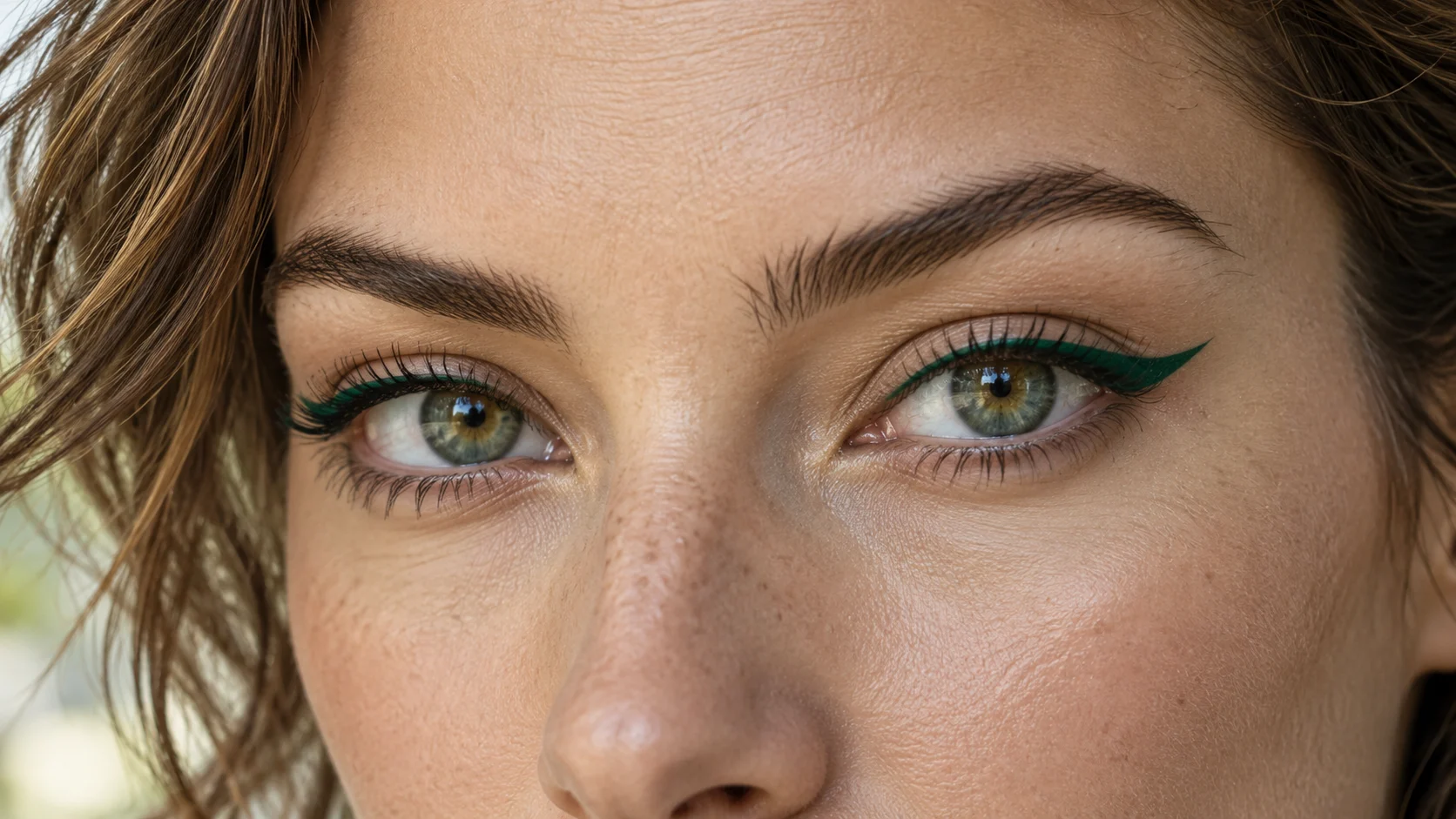
Colourful eyeliner ideas are most useful when they start small. A short blue line, a soft plum accent or a bright detail at the outer corner can change a familiar makeup routine without requiring a full eye look. You can keep the same base and lip colour while experimenting with one controlled shape.
Current beauty coverage has made more room for decorative and expressive eyes, but everyday versions do not need to be theatrical. Think of colour as a detail you place deliberately. The following approaches help you choose a manageable product, build a shape gradually and correct mistakes without turning the whole lid into a heavy line.
Pick the product before the shape
A pencil often gives you time to soften an uneven edge, while some liquid formulas create a sharper line and set quickly. The useful choice depends on your confidence and the finish you want. Read the instructions and choose a product intended for the eye area.
Do not use a lip pencil, craft paint or loose decorative glitter around the eyes because the colour looks appealing. Cosmetic products have specific intended uses. If you want a shade you do not own in an appropriate eye formula, choose another colour rather than improvising with an unsuitable material.
Try the formula when you have time
Practice before a busy morning or important event. Check whether the product glides, catches, transfers or needs a particular removal method. A formula that works on a hand swatch may behave differently on your eyelid, so a small test look is more informative.
Use a clean tool and follow any product warnings. Stop if the product causes irritation. No eyeliner shape is worth discomfort, and continuing to apply more product usually makes both the look and the problem harder to assess.
Keep the line close to the upper lashes
For a first experiment, apply colour in small sections near the upper lashes rather than drawing one long sweep. Short marks are easier to connect and control. Look straight ahead between sections so you can see how the line appears when the eye is open.
You do not need to cover the entire lash line. Colour on the outer third can be enough. Keep the inner section simple while you learn how the shade changes the look. Once the small version feels comfortable, you can extend it if you want more presence.
Make a short outer accent
A small outward flick can feel playful without becoming a large wing. Mark the end lightly, then connect it to the upper line. Compare both eyes with your face relaxed. A shape that looks symmetrical with the eyes closed may look different when you open them.
Let the angle suit your eye shape rather than forcing a reference photograph exactly. If a sharp flick feels difficult, soften the outer edge into a small shadow. A controlled blurred accent is a finished look, not a failed version of a wing.
Use colour above a familiar neutral line
If you already draw a reliable dark line, add a narrow coloured detail above part of it. This keeps the shape familiar while allowing the new shade to show. Begin with a short section so the two lines do not become a thick band.
Choose whether you want clear contrast or a subtle relationship. Plum beside dark brown can feel quieter than turquoise beside black. Test the effect in daylight. The colour may appear stronger or softer depending on your skin, the formula and the width of the line.
Try a soft pencil edge instead of a sharp graphic shape
A blendable eye pencil can create a small wash close to the lashes. Apply a little product, then soften it with a suitable clean brush before it sets. Keep the movement controlled so the colour stays where you intended rather than spreading across the whole lid.
This approach is useful when your hands are not steady enough for a fine liquid line. It also suits a more relaxed outfit. Pair it with a simple base and a familiar lip so the colour remains the main new detail.
Choose colours from your wardrobe
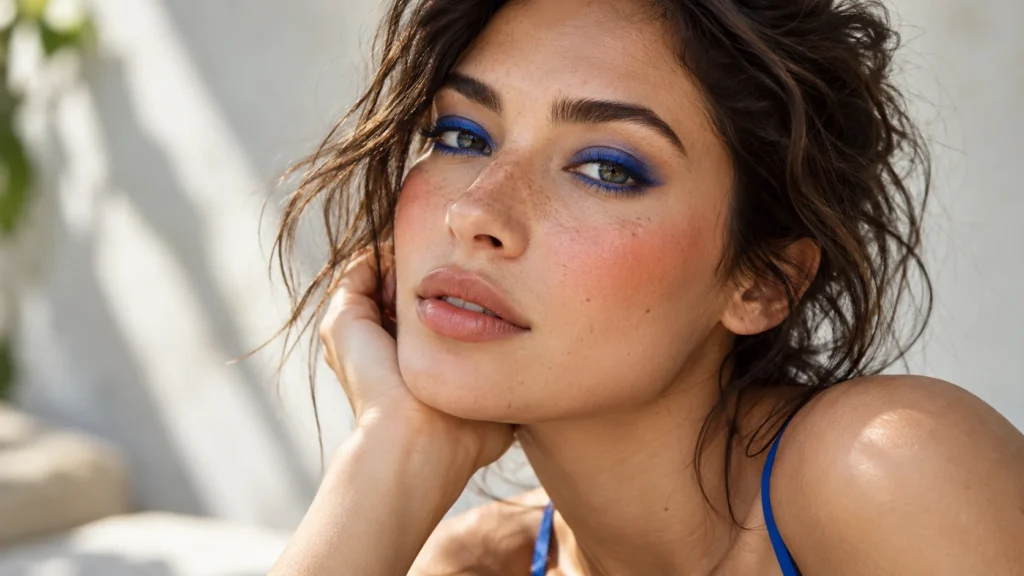
Look at a scarf, knit or accessory you enjoy wearing. A related eyeliner shade can connect the makeup to your outfit without matching it exactly. You might choose a plum detail beside a burgundy bag or a blue accent with a neutral outfit.
Do not repeat every colour in a patterned outfit on your face. One connection is usually enough. Our scarf styling guide offers simple clothing combinations where a small coloured eye detail can sit comfortably beside a print.
Keep the rest of the face manageable
Use your ordinary base, brows and lip while you test the liner. If the colour looks too strong, reduce the width or the length before adding more makeup elsewhere. Trying to balance an oversized line with stronger blush often creates a much heavier face.
Our natural makeup routine makes a useful starting point. For a more expressive version, change one extra feature after the liner is settled. A clear sequence helps you understand which adjustment improved the result.
Correct mistakes before they become bigger
When the line is uneven, pause and inspect the shape from a normal distance. You may only need to remove a small section. Adding thickness everywhere to hide one mistake can turn a small accent into a large eye look you never intended.
Use an appropriate removal method and a clean small tool, keeping products out of the eye. Let the area settle before reapplying. Repeated rubbing can make the skin uncomfortable and the next line harder to control.
Plan for wear and removal
Try the look on an ordinary day before relying on it for a long event. Notice whether the product transfers when you blink or fades in a way you dislike. These observations help you decide whether the formula suits your routine or only works for a short photograph.
Remove it according to the product instructions instead of scrubbing. A long wearing formula may need a specific remover. Keep that product available before you begin, especially when practising several versions in one session.
Colourful eyeliner ideas checklist
- A short plum line on the outer third of the upper lid.
- A soft blue pencil edge close to the lashes.
- A narrow coloured accent above part of a familiar neutral line.
- A small flick with the rest of the eye kept simple.
- A wardrobe inspired shade used as the only bright makeup detail.
These are starting shapes rather than fixed rules. Adjust the placement and intensity to what you like seeing on yourself. The best technique is one you can reproduce comfortably without needing to rebuild the entire face.
Questions that come up while practising
Does colourful liner need matching eyeshadow?
No. A plain lid can make the colour easier to see and reduce the number of products you need to manage. Add shadow only when it supports the shape you want. A simple line is a complete eye look if you enjoy the finish.
Can I wear colour with a strong lip?
Yes, but begin with a smaller line and compare the full face. You can also use a softer lip application, as in our blurred lip guide. The balance depends on intensity and placement, not a strict ban on combining colour.
For wider trend inspiration, see Vogue’s Milan beauty report. Borrow the idea of expressive eyes, then scale it to the time, products and shapes that work for you.