
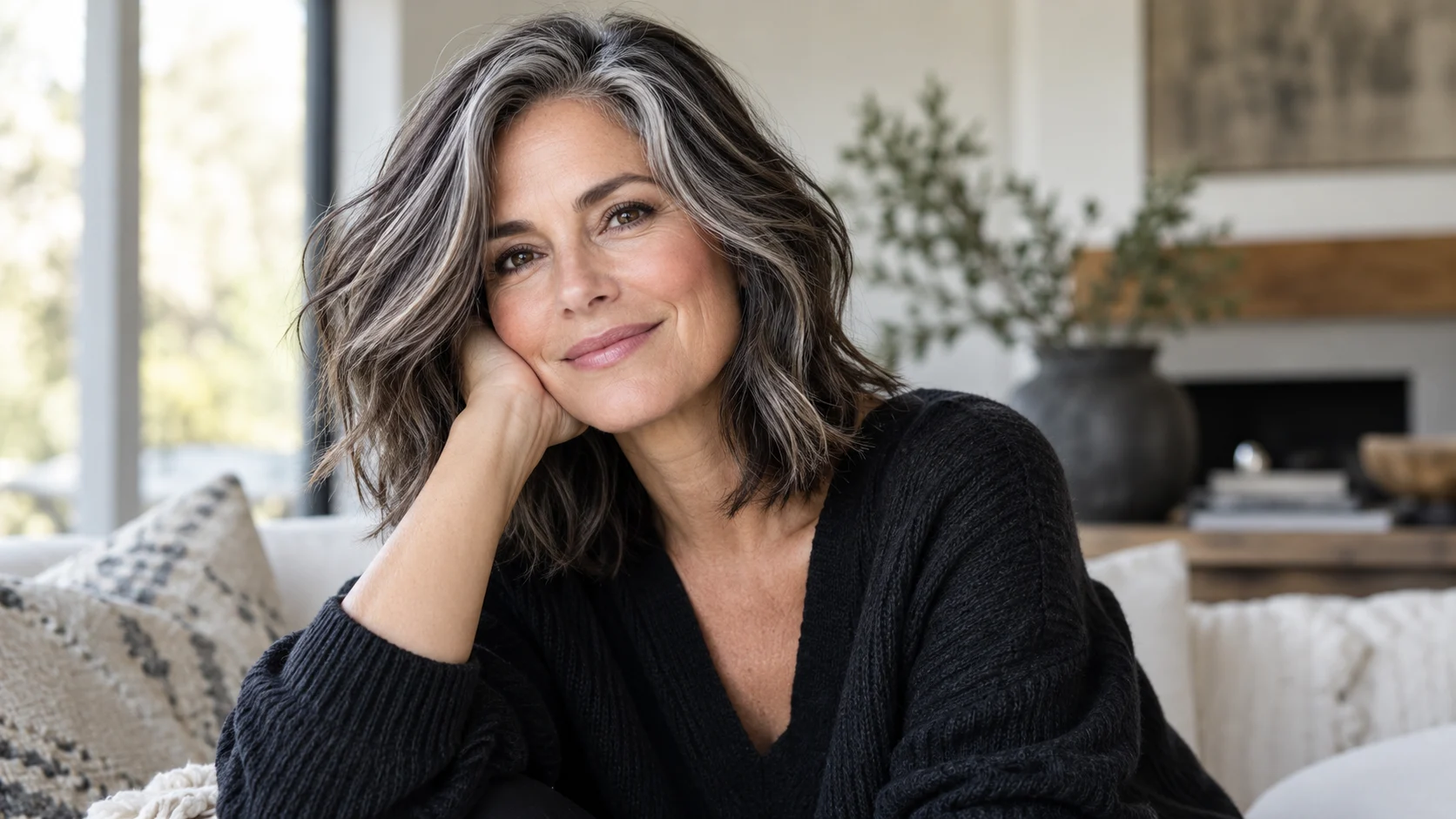
Gray blending is a hair colour approach that works with visible gray rather than treating complete coverage as the only goal. The exact technique depends on your starting colour, the amount and placement of gray and the finish you want. It can be a gradual transition, but it is not automatically a low effort or one appointment solution.
The approach has featured in current hair colour coverage, including the softer idea of quiet silver. Before choosing it, think about maintenance, previous colour and the look you will enjoy between appointments. This guide helps you prepare a useful salon conversation rather than promising one formula for everyone.
Decide what you want to change
Some people want less contrast at the roots. Others want to show more natural gray while keeping dimension through the lengths. You may simply want to move away from a solid colour that requires frequent attention. These goals can lead to different plans.
Write down what currently frustrates you and what you are happy to keep. A clear description helps a colourist understand the problem beyond a reference photograph. You do not need technical terminology; phrases such as softer regrowth or more natural variation are useful when explained in your own words.
Separate blending from complete coverage
Complete coverage aims for a more uniform result, while blending allows gray to remain part of the overall colour. The finish can still include salon colour, but the balance is different. Ask the colourist to explain which approach they recommend and what will remain visible.
Do not assume that blending means every gray strand will disappear. If that is the result you want, say so clearly. A consultation is the place to align expectations before any colour is applied, rather than discovering afterwards that you and the stylist meant different things.
Bring references that show colour and regrowth
Choose a few images with a starting colour or texture reasonably close to yours. A final polished photograph may show the effect you enjoy, but an image with visible regrowth can help discuss maintenance. Ask what parts of the reference are achievable for your hair.
Avoid collecting many conflicting examples. A cool silver result, a warm highlighted result and a fully covered dark result communicate different goals. Choose the main direction first, then use the other images to explain what you do not want rather than presenting everything as equally desirable.
Explain your colour history honestly
Tell the colourist about previous dyes, lightening, chemical services and any at home colour you have used. Include approximate timing and products when you know them. The history of the lengths matters even if the roots are now natural.
Do not leave out information because you think a home product sounds unprofessional. Accurate history helps the stylist assess options and avoid unsuitable assumptions. If you cannot remember the details, say so. Guessing an exact product or date is less useful than being clear about uncertainty.
Ask about the transition, not only the first result
Discuss how the colour is likely to look as it grows and how future appointments may differ from the first one. Ask whether the plan involves several stages and what the stylist expects between them. A softer transition should be understood as a process rather than a single photograph.
You can also ask what happens if you later decide to keep more natural gray. A flexible plan may be easier to live with than an approach that requires a finish you are unsure about. Make the decision around your future routine as well as the immediate effect.
Keep maintenance expectations realistic
A blended look may reduce some visible contrast, but it can still involve appointments, toning or specific care. Ask about the likely upkeep for your proposed result rather than assuming that the phrase low maintenance means no maintenance.
Consider your budget, travel and available time. A colour plan that needs attention more often than you can manage will become frustrating. Tell the stylist your realistic limits before choosing a technique. It is better to adapt the finish than to commit to a routine you cannot sustain.
Follow product and salon instructions
Hair colour products require appropriate use, including the safety instructions supplied with them. Follow the salon’s advice and any required allergy testing guidance. Do not improvise a complex colour correction at home because a short video makes it look simple.
If you have a history of reactions or scalp problems, mention it during the consultation and seek appropriate medical advice when needed. A trend is not a reason to ignore discomfort. You can appreciate a colour idea while choosing a different approach for your circumstances.
Support the hair with a manageable care routine
Follow a washing and conditioning routine suitable for your hair and the colour service. Ask the colourist which product functions are necessary and which are optional. Avoid buying every item in a range without understanding what each one adds.
Our healthy hair habits guide provides a basic care framework. For heat styling, the American Academy of Dermatology recommends controlled heat and suitable protection. Keep the styling routine comfortable rather than repeatedly chasing a salon finish.
Think about the cut and styling too
Colour and shape work together. A different parting or a change in the cut can alter how the natural gray is seen, but that does not mean you need a dramatic haircut. Discuss whether a small adjustment could support the colour direction you want.
Our soft volume styling guide offers ideas for movement without a rigid finish. A style you can repeat at home makes the colour easier to enjoy than one that only looks right after professional styling.
Gray blending checklist
- What result is realistic from my current colour?
- How much natural gray will remain visible?
- Will the transition need more than one appointment?
- What maintenance should I expect between visits?
- Which home care steps are necessary?
- How can the plan change if I want more natural gray later?
Write the answers down so you can consider them after the appointment. You do not have to agree to a major colour change immediately. A useful consultation leaves you understanding the process, costs and maintenance rather than only excited by a reference image.
Frequently asked questions
Is gray blending suitable for dark hair?
It may be an option, but the starting colour, previous services and desired contrast affect the plan. A colourist can assess those details. Do not assume a technique shown on naturally light hair will produce the same transition on previously coloured dark lengths.
Does blending mean I am giving up colouring my hair?
No. It can involve colour used to support a different balance of natural gray and other tones. You can also choose full coverage or no colour at all. The useful choice is the one you enjoy and can maintain, rather than a rule about how gray should be worn.
For current context, see Allure’s quiet silver coverage. Treat the trend as a starting point for your own consultation, with the final plan based on your hair history and preferences.