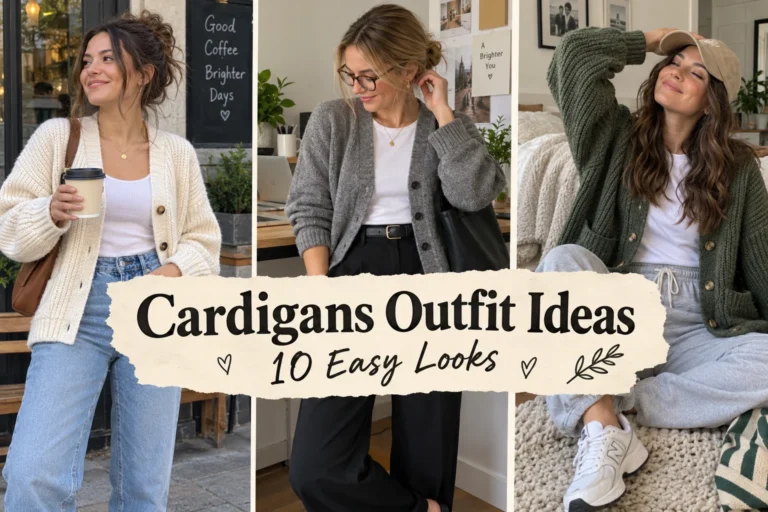
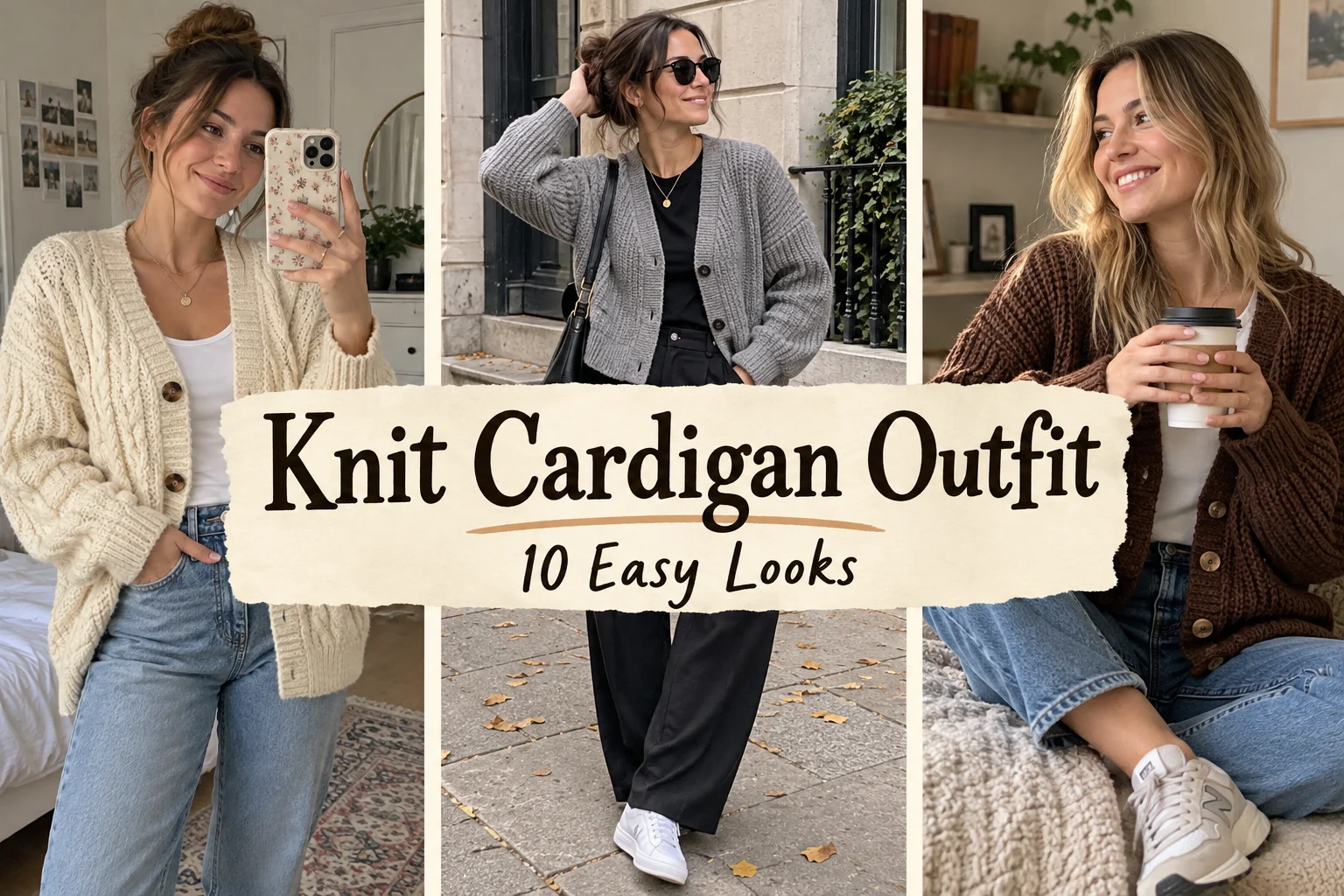
A knit cardigan outfit is easier to plan when you pay attention to texture as well as colour. A chunky cable knit creates a different effect from a smooth fine-gauge cardigan, even when both are beige. Ribbing can add a clear vertical surface, while a fluffy finish can soften tailoring. These differences help explain why one cardigan works with an outfit and another feels awkward.
You do not need specialist fashion knowledge to make those choices. Notice the fabric weight, where the hem ends, and how much room you have underneath. This guide offers ten combinations built around those details. The advice focuses on practical styling and garment checks, without pretending every fabric behaves identically or that one silhouette suits everyone. Use the formulas with your existing clothes, then adjust them for your temperature, movement, and coverage preferences.
Understand the knit before choosing the outfit
Knit construction and fibre content describe different things. Cable knit and rib knit refer to the surface or structure; cotton, wool, acrylic, and other fibres describe the materials. A cable cardigan is not automatically wool, and a fine knit is not automatically cool to wear. Check the label and feel the actual garment instead of relying on its product name.
Dense fabric may need more space under a coat, while open construction may need a base layer for coverage. A soft-looking cardigan can still feel irritating against sensitive skin. Wear it briefly over the intended top before committing to a full day. If the neckline or cuffs bother you, a different base layer might help, but the material may simply be unsuitable for you.
Observe how the cardigan hangs when both open and closed. Thick button bands can create stiffness; heavy pockets can pull the front downward. These are fit considerations, not signs that your shape is wrong. Look for a cut that supports the way you want to wear the garment.
1. Cable knit with straight denim

Cable knit brings enough surface detail to make plain jeans and a cotton top feel complete. Start with a cream, grey, or brown cardigan and straight denim in a wash you already wear often. Keep the base layer smooth so it does not compete with the cable pattern. Trainers make the outfit relaxed, while loafers give it a tidier finish.
Check whether the cardigan hem sits flat over the jeans waistband. Thick ribbing can bunch when it meets a substantial belt. You can remove the belt, wear the cardigan open, or choose a base-layer tuck instead. Do not push a heavy cable knit into tight jeans just to copy a photograph.
2. Fine knit with tailored trousers

A fine knit cardigan is often a practical choice beside tailoring because it adds a soft layer without much bulk. Pair it with straight or wide-leg trousers and a simple vest, then choose loafers or flat ankle boots. Dark navy with grey, cream with black, or brown with beige are accessible starting points rather than mandatory combinations.
Fasten the cardigan only if the buttons lie comfortably. Fine material can reveal tension quickly when stretched across a base layer. If the band opens when you reach forward, try wearing it open or choosing a cut with more room. A smooth camisole underneath allows flexibility without compromising coverage.
Check the cardigan in daylight if it is pale or very thin. Fine knitwear may show the outline of a bra or base-layer seam more clearly than a heavier cardigan. Select underlayers according to your comfort and the appearance you want. A polished outfit comes from those useful checks, not from a particular fibre price.
3. Ribbed knit with a simple skirt
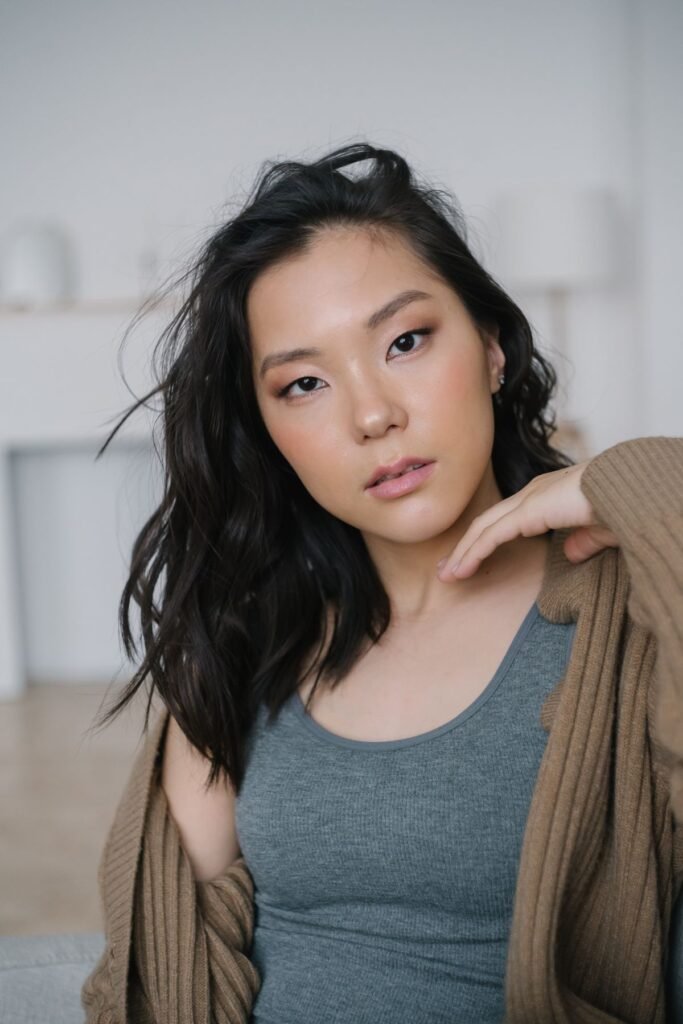
A ribbed cardigan and a plain skirt create interest through surface detail instead of a strong print. A shorter cardigan can meet a high waistband, while an open longer style can frame the skirt. Try a denim midi for everyday wear or a fluid skirt for a softer finish. Start with one clear colour connection between the pieces.
Ribbing can stretch and recover differently between garments. Do not assume a cardigan will stay comfortable just because it expands when pulled. Button it, sit down, and check whether the fabric remains smooth enough for your preference. If the ribs spread noticeably between buttons, another size or silhouette may be easier to wear.
4. Chunky knit over a light dress

A chunky cardigan over a lightweight dress creates a useful contrast between substantial knitwear and a fluid skirt. Choose a dress that hangs comfortably beneath the cardigan without catching at the waist. A plain dress makes the texture easier to notice, while a printed one can work if the cardigan colour connects with its pattern.
Try the combination from the side as well as the front. A thick cardigan resting over a gathered waist may create more volume than you expect. You can wear it open, choose a shorter length, or use a dress with less gathering. There is no requirement to belt the outfit if that feels restrictive.
5. A long knit cardigan with straight trousers

A long cardigan works well over a simple top and straight trousers when you want an easy layered outline. Choose a weight that hangs without pulling at the shoulders. Very heavy knitwear may become uncomfortable over a long day, especially if large pockets are filled. Keep your essentials in a bag so the cardigan can retain its shape.
Wearing the cardigan open reveals the base outfit and allows movement. A belt is optional, and a soft tie designed for the garment is often easier than forcing a stiff belt around thick fabric. If you use one, check comfort while seated and make sure it does not catch the knit loops.
Look at the hem around stairs, chairs, and bags. A dramatic length can be attractive but inconvenient on public transport or in wet weather. Shortening the visual line by choosing a knee-length or hip-length version may suit your routine better. The best length is the one you can wear without constantly protecting it.
6. Cotton knit for mild-weather layering

A cotton knit cardigan can be useful on a mild day, particularly as a removable layer over a vest or T-shirt. However, cotton content alone does not guarantee a lightweight garment: a thick cotton cardigan may still feel warm and substantial. Handle the piece and check its construction before choosing it for hot weather.
Pair a lighter style with linen-blend trousers, jeans, or a plain skirt. Leave the front open if that feels cooler and check that sleeves do not become cumbersome when pushed up. Some cuffs hold their shape well; others stretch when repeatedly rolled. Use the method that suits the garment rather than treating rolled sleeves as essential styling.
7. A textured cardigan with a monochrome base

A textured cardigan over a top and trousers in similar shades allows you to focus on fabric instead of colour contrast. Try a cream cable knit over an ivory base or a charcoal cardigan over black. Nearby shades do not need to match perfectly; differences become easier to appreciate when the surfaces are distinct.
Check the tones together in natural light. Two pieces that look similar indoors may differ noticeably outside. That difference can be attractive, but it helps to see it before leaving home. If the outfit feels too uniform, add shoes or a bag in a deeper shade rather than introducing several bright accessories at once.
8. A knit cardigan over a shirt

Layering knitwear over a shirt adds a clear neckline and allows you to use a familiar wardrobe staple in cooler weather. A medium or fine cardigan is usually easier over a shirt than a tightly fitted chunky knit. Choose a shirt sleeve that has enough room beneath the cardigan without folding into bulky ridges.
White, pale blue, and subtle stripes are useful starting points. If the cardigan has strong cable detail, a plain shirt keeps the combination quieter. Let the collar rest naturally rather than stretching the cardigan neck to accommodate it. You can leave the top cardigan buttons open if the layers feel crowded.
9. Soft knit with a satin skirt

A softly textured cardigan and a satin skirt create contrast between a matte surface and a smoother one. Cream with chocolate, grey with navy, or muted pink with black can work without requiring a matching set. Use a smooth top underneath if you plan to leave the cardigan open, and let the skirt move freely.
Check whether the knit catches on the skirt fabric. Rough fibres, loose buttons, and sharp bag hardware can all cause problems around delicate material. Try walking and sitting in the combination before wearing it for an event. The texture contrast is only useful if the fabrics remain comfortable together.
10. A relaxed knit with comfortable weekend trousers

For a slow weekend, pair a relaxed cardigan with jersey or loose woven trousers and a simple top. Choose pieces that stay comfortable while sitting, moving around the house, and stepping out for errands. The cardigan can add warmth and a deliberate layer without turning a restful day into an elaborate styling exercise.
If both cardigan and trousers are roomy, keep the base layer relatively smooth. This makes the layers easier to manage, although you can still wear a loose top if that is your preference. Check that long hems and sleeves do not get in the way while cooking or working at a table.
Shop by garment quality and practical use
Inspect seams, button attachments, and the inside finish when choosing a cardigan. Ask whether the neckline keeps its shape, whether the sleeves fit beneath your usual coat, and whether the care instructions suit your routine. A garment that needs treatment you cannot realistically provide may be less useful, regardless of its fibre content.
Consider how often you will wear the colour and silhouette. If you can name three combinations with existing clothes, you have a stronger reason to buy it than if you only like the product photograph. Price and brand do not remove the need for fit checks. Likewise, a blended knit is not automatically poor quality simply because it contains more than one fibre.
Care for different knits thoughtfully
Read the label before washing or drying. A knitted surface tells you little about the correct treatment on its own. For wool garments, Woolmark's care guidance can support the instructions supplied with your cardigan. Follow those garment-specific instructions when they differ from general advice. Avoid wringing, high heat, or any treatment the label rules out.
Fold heavier cardigans so their weight does not hang from the shoulders. Check loose threads before they become larger snags and remove pilling gently with a suitable tool. Never cut a loop without understanding whether it is part of the knit structure. A repair specialist can help when damage needs more than simple button replacement.
Frequently asked questions
How do I style a chunky knit without feeling bulky?
Start with a smooth base layer and choose a hem that sits comfortably against your waistband. Wearing the cardigan open can make the layers easier to manage. A roomier coat may also solve restriction better than sizing down the knit.
Are ribbed cardigans suitable as tops?
Some are, provided they offer the coverage and fit you want. Check opacity and button gaps in daylight, then move and sit down. A camisole can provide an additional layer if the cardigan is open or closely fitted.
Can I wear a knit cardigan in warmer weather?
Yes, when the actual weight and conditions suit it. A light layer can be useful indoors, but thick knits may feel too warm outside. Construction, fibre blend, and humidity matter more than the word knit on a product label.
What should I do if a cardigan catches on my dress?
Try a smoother cardigan or a different dress fabric. Check buttons and accessories for sharp edges as well. Do not keep wearing the combination if it repeatedly snags delicate material; changing one piece is the practical solution.
Let texture make the outfit interesting
Choose one textured piece and build around clothes that support its weight and shape. For simple everyday combinations, explore the cardigan sweater outfit guide. If you prefer pattern as the main detail, see striped cardigan outfit ideas. A thoughtful knit outfit is comfortable in motion, works with your daily plans, and gives the clothes you already own another useful role.